
In this guide
El Niño affects seasonal weather tendencies but does not guarantee rainfall at your home. Prepare for storms by checking drainage and roof concerns safely, reviewing alerts, and making a household response plan.
Keep it handy
A free printable for this guide
Save a copy for your fridge or binder. No email needed.
Storm readiness checklist
Prepare for heavy rain, wind and evacuation before conditions become dangerous.
Read the checklist online
Work through this before severe weather. Keep the completed plan with your emergency supplies.
Follow local alerts and evacuation orders. Never walk or drive through floodwater. Skip outdoor work once conditions are unsafe.
Before the weather arrives
- Check local forecasts and sign up for your city or county emergency alerts.
- Choose a meeting place, an evacuation route and a backup place to stay with pets.
- Charge phones and power banks; gather medication, water, food, flashlights and essential documents.
- From ground level, look for loose outdoor items and blocked drainage. Arrange qualified help for roof, gutter or tree work.
Before you leave
- Bring emergency supplies and pet essentials. Let your household contact know where you are going.
- Move important belongings out of low areas only while it is safe to do so.
- Keep a copy of household contacts and insurance information available offline.
Space to fill in
- Local alert source
- Meeting place / backup
- Route / alternative route
- Who checks on whom
Reference guidance
Make it your own
Prepare together
Household emergency plan
Put your contacts, meeting places, pet needs and utility locations on one personal fridge sheet.
Make your fridge sheetQuick Answer: El Niño brings significantly increased rainfall to Southern California—typically 150-200% of normal precipitation, concentrated in intense atmospheric river storms. Prepare your home by inspecting and repairing your roof before rainy season, cleaning gutters and downspouts, verifying drainage directs water away from your foundation, checking window and door seals, trimming trees near your home, and reviewing your insurance coverage (add flood insurance—30-day waiting period). El Niño seasons have produced catastrophic flooding, mudslides, and billions in property damage across LA and Orange County. Call Save The Day Restoration at (562) 246-9908 for storm damage restoration across LA and Orange County.
What Is El Niño and Why Should LA Homeowners Care?
El Niño is a climate pattern characterized by warmer-than-normal sea surface temperatures in the equatorial Pacific Ocean. For Southern California, El Niño shifts the Pacific jet stream southward, directing moisture-laden storms directly at our region instead of their typical track into the Pacific Northwest.
The result is a dramatic increase in rainfall—both in total volume and in the intensity of individual storms. El Niño winters typically bring 150-200% of normal precipitation to LA and Orange County, with extreme events delivering even more. Critically, this rainfall often arrives in concentrated bursts: atmospheric river events that can dump 3-8+ inches of rain in 24 hours, overwhelming drainage systems, saturating hillsides, and causing widespread flooding.
Historical El Niño damage in Southern California has been severe. The 1997-98 El Niño caused an estimated $550 million in damage across California, with major flooding and mudslides throughout LA and Orange County. The 2015-16 El Niño brought intense storms that caused road closures, power outages, mudslides, and widespread property flooding. Every El Niño season produces significant property damage—preparation is the difference between minor inconvenience and catastrophic loss.
How Should You Prepare Your Roof for El Niño?
Your roof is your home's primary defense against rainfall, and El Niño storms will test every weakness. Schedule a professional roof inspection before rainy season begins (ideally by September-October).
What Should a Roof Inspection Cover?
Tile, shingle, or flat roof surface for cracks, missing pieces, lifting, or deterioration. Flashing around all roof penetrations (vents, chimneys, skylights, satellite dishes)—flashing failure is the number one source of roof leaks. Underlayment condition (the waterproof membrane beneath roofing material)—degraded underlayment allows water intrusion even when surface materials appear intact. Valley areas where roof planes meet—these concentrate water flow and are high-risk for leaks. Ridge caps and hip caps for secure attachment. Roof-to-wall connections where the roof meets vertical walls (common on multi-level homes).
Common LA and Orange County roofing issues include cracked or slipping concrete and clay tiles (extremely common on homes 15+ years old), degraded flat roof membranes (particularly on mid-century modern and commercial-style homes), failed flashing that's been painted over instead of properly replaced, and exposed or deteriorated underlayment on older roofs.
How Do You Prepare Your Drainage System?
Why Are Clean Gutters Critical During El Niño?
Clogged gutters during an atmospheric river event cause water to overflow and cascade down exterior walls, saturating stucco and entering through window and door frames. Water pools at the foundation instead of being directed away. Overflow water erodes soil adjacent to the foundation. Ice dams (rare in SoCal but possible in mountain-adjacent areas during cold storms) can force water under roofing materials.
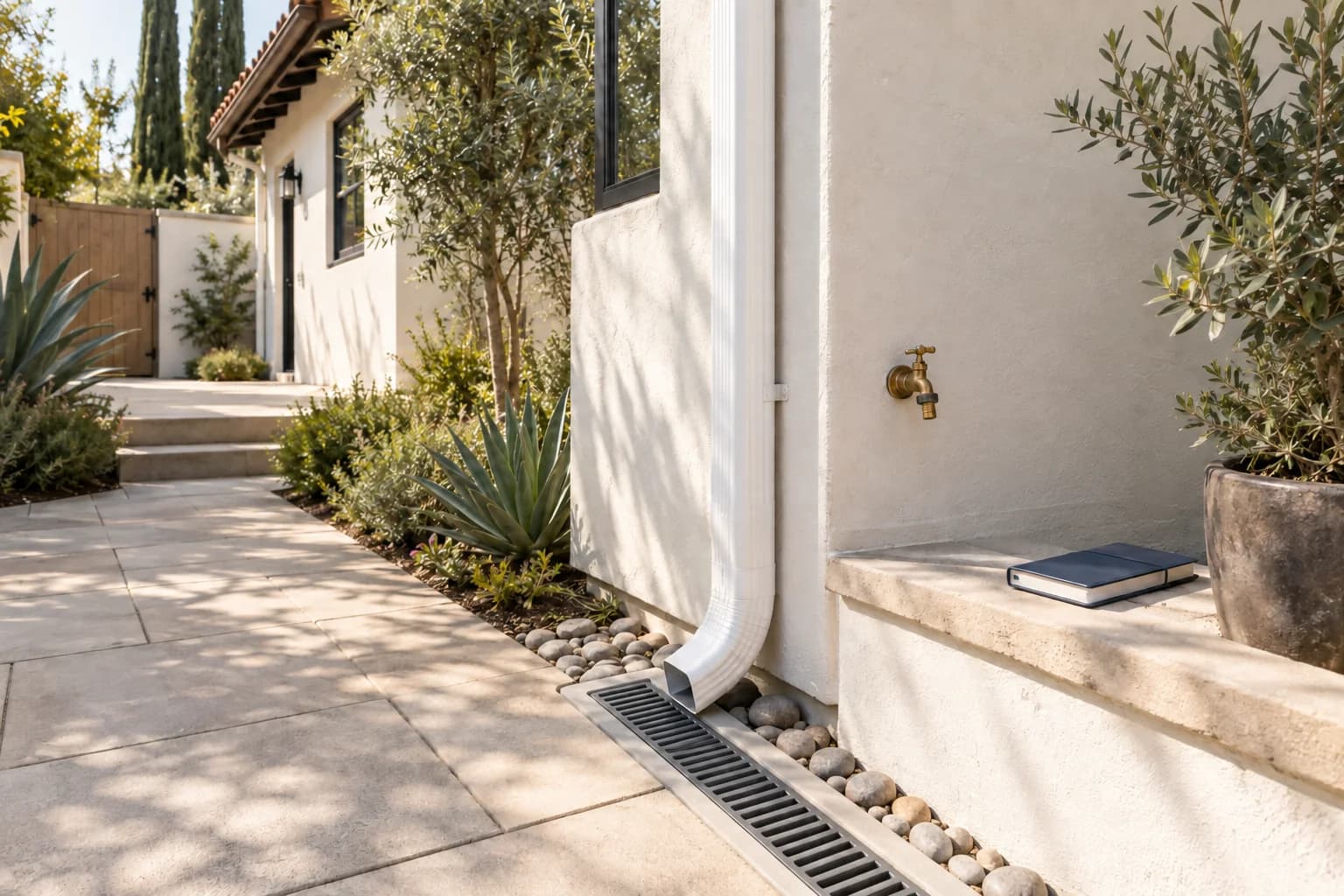
Clean all gutters and downspouts thoroughly. Verify that downspouts discharge at least 4-6 feet from the foundation (use downspout extensions if needed). Check that all gutter connections are tight and not leaking. Inspect gutter slope—gutters should slope toward downspouts with no low spots where water pools.
How Should You Check Your Property Drainage?
Walk your property during or immediately after a moderate rain and observe where water flows. Water should drain away from your foundation on all sides. If water pools near your foundation, you have a grading problem that needs correction before El Niño storms arrive. French drains, surface drains, and area drains should be clear and flowing freely. If your property drains toward your home, consult a drainage contractor—regrading, installing French drains, or adding area drains can prevent thousands of dollars in water intrusion damage.
How Do You Protect Against Water Intrusion?
Where Does Water Enter During Heavy Storms?
During intense El Niño rainfall, water enters homes through window and door frames (failed or deteriorated weatherstripping and caulking), wall penetrations (hose bibs, electrical outlets, cable entries), stucco cracks (LA and Orange County homes with stucco siding—which is most homes—are vulnerable to water intrusion through even hairline cracks), foundation-to-sill plate connections, garage doors (especially during wind-driven rain), and sliding glass doors (track drains can overwhelm during heavy rain).
Inspect and re-caulk all window and door frames. Seal any stucco cracks with elastomeric caulk. Verify that weep screeds at the base of stucco walls are clear and functioning. Check weather stripping on all exterior doors. Install or replace door sweeps at the bottom of exterior doors.
How Do You Protect Hillside Properties During El Niño?
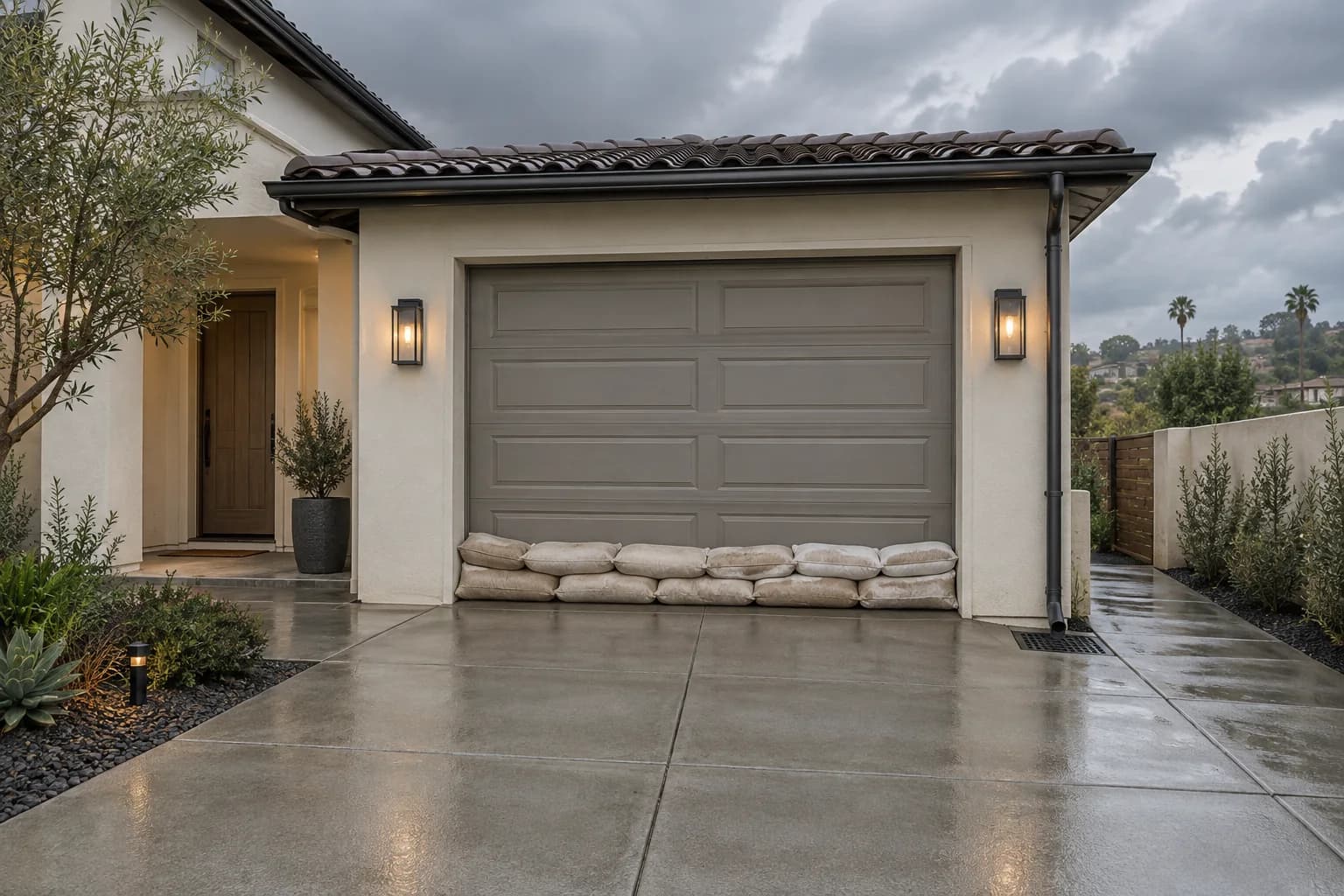
Hillside properties in LA and Orange County face elevated risk during El Niño from both water intrusion and slope instability. Inspect and clean all hillside drainage systems (terrace drains, v-ditches, area drains). Verify that retaining walls are in good condition with functioning weep holes. Clear debris from slope surfaces that could be mobilized during heavy rain. Consider installing temporary sandbag barriers or k-rails if your property is below a steep slope. Monitor slope stability—new cracks, leaning trees, bulging retaining walls, or water seeping from slopes are warning signs of potential movement.
If your hillside property is below a recently burned area, the risk is exponentially higher. Review the USGS post-fire debris flow assessments for your area and follow evacuation orders without hesitation.
What Insurance Should You Review Before El Niño?
Review your homeowner's policy for adequate dwelling coverage, storm-related endorsements, and ALE limits. Add flood insurance if you don't already have it—remember the 30-day waiting period. Consider sewer backup endorsement ($40-$75/year) as heavy rainfall overwhelms sewer systems. Verify your deductible—some policies have separate wind/hail deductibles. Create or update your home inventory—homeowners with documented inventories receive 15-20% higher claim settlements. Store important documents and insurance policy information in a waterproof container or cloud storage.
What Emergency Supplies Should You Have Ready?
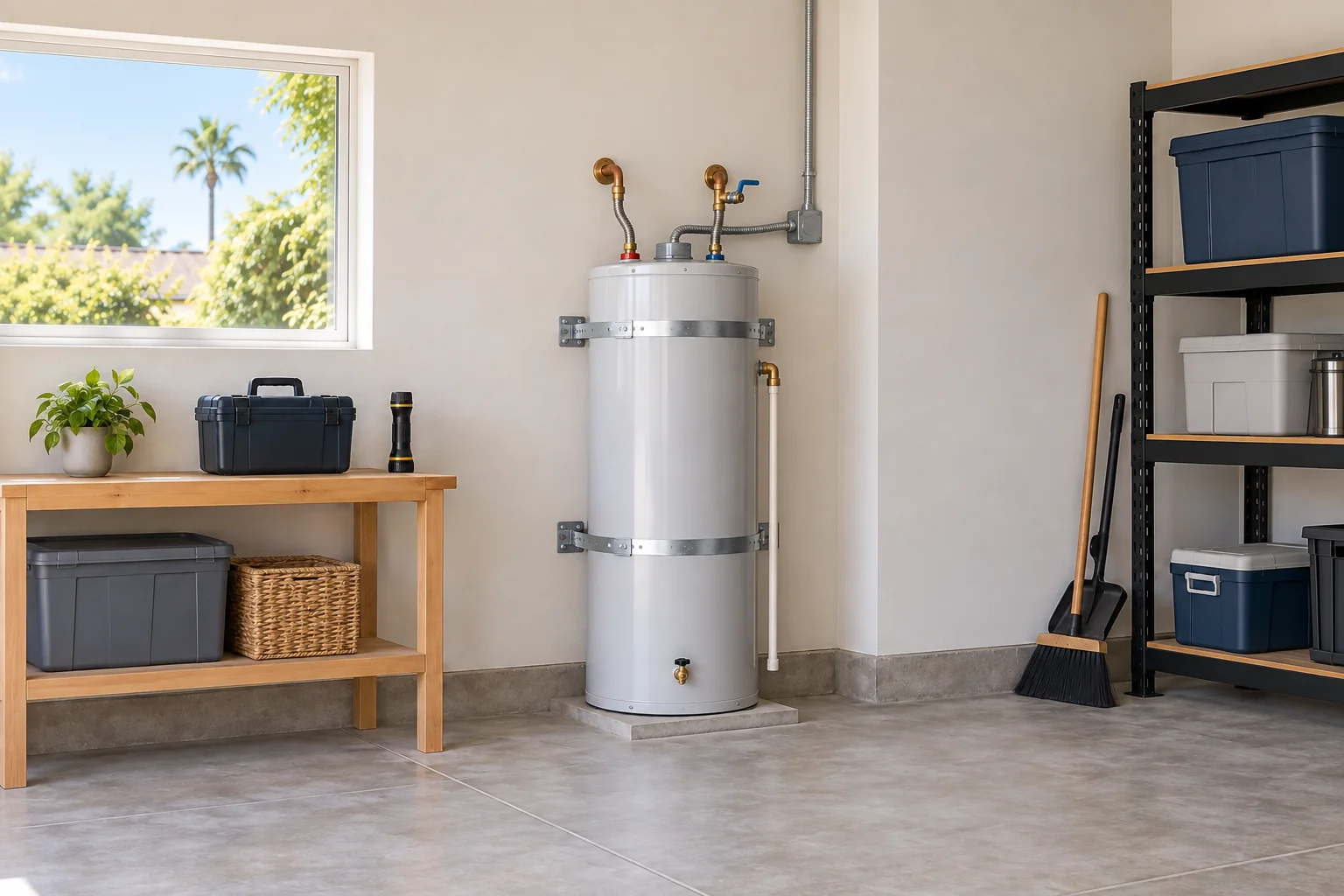
Prepare a storm emergency kit including flashlights and extra batteries, portable phone charger, first aid kit, 72-hour supply of water (1 gallon per person per day), non-perishable food for 72 hours, battery-powered or hand-crank radio, sandbags (available free from many LA and Orange County fire stations before storm events), plastic sheeting and tarps, and a wet/dry shop vacuum.
FAQ: El Niño Storm Preparation
Q: When does El Niño typically affect Southern California?
A: El Niño's strongest effects on Southern California occur during the winter rainy season, typically November through March, with peak storm activity in January and February. However, El Niño conditions can influence weather patterns from October through April.
Q: How much rain does El Niño bring to LA?
A: El Niño typically increases LA rainfall by 150-200% of normal. Downtown LA averages about 14 inches annually; a strong El Niño year can deliver 20-30+ inches. More importantly, the rain arrives in intense bursts—single atmospheric river events delivering 3-8+ inches in 24 hours.
Q: Should I get flood insurance even if I'm not in a flood zone?
A: Yes, especially before an El Niño season. Over 25% of flood claims come from outside FEMA high-risk zones. Urban flooding from overwhelmed storm drains affects many neighborhoods not designated as flood zones. Premiums for low-risk areas are relatively affordable ($500-$1,500/year).
Q: How much does storm preparation cost?
A: Basic preparation (gutter cleaning, caulking, drainage inspection) costs $200-$800. Roof inspection runs $150-$400. Minor roof repairs cost $200-$1,500. Drainage improvements range from $500-$5,000 depending on scope. These costs are a fraction of the $10,000-$50,000+ a major water intrusion event can cause.
Q: What should I do during an atmospheric river event?
A: Monitor your home for water intrusion—check ceilings, walls, windows, and the garage during heavy rainfall. If water enters, begin extraction immediately and call a professional. If you're in a hillside area with evacuation warnings, leave early. Do not drive through flooded roads—it takes only 12 inches of moving water to sweep a vehicle.
Q: Does Save The Day Restoration respond during El Niño storms?
A: Yes. We maintain full 24/7 response capability during storm events, with additional crews and equipment staged for El Niño seasons. We respond to emergency tarping, water extraction, structural drying, and all storm-related restoration needs throughout LA and Orange County.
Prepare Now—Before the Storms Arrive
El Niño preparation is a race against the calendar. Every improvement you make before the first major storm reduces your risk of costly damage.
Call Save The Day Restoration at (562) 246-9908 for storm preparation guidance and 24/7 emergency response when storms hit. Complete storm damage restoration including emergency tarping, water extraction, structural drying, mold prevention, and reconstruction throughout Los Angeles and Orange County. IICRC-certified technicians, licensed general contractor #1049188, direct insurance billing available.
How we prepare and update our guides
Related serviceWater Damage RestorationEmergency water extraction & dryingAbout Save The Day Restoration
Save The Day Restoration is a locally owned, IICRC-certified restoration and reconstruction company serving all of Los Angeles and Orange County. The team coordinates water, fire, and mold restoration and reconstruction, including specialist work when needed. Licensed (CSLB #1049188), bonded, and insured, with 24/7 emergency response.
Call (562) 246-9908