AEO SCHEMA

When Should You Test For Mold And How Does Mold Testing Work?

When Should You Test For Mold And How Does Mold Testing Work? - Save The Day Restoration blog
Written by
No items found.
Published on
May 16, 2026

Quick Answer: Test for mold when you smell persistent musty odors but can't see mold, when family members develop unexplained respiratory symptoms that improve away from home, after water damage that may not have been fully dried, before purchasing a home with water damage history, or when you need species identification for health or insurance purposes. Professional mold testing costs $300-$600 and includes air sampling, surface sampling, moisture mapping, and certified laboratory analysis. Don't use consumer test kits—they produce unreliable results. Call Save The Day Restoration at (562) 246-9908 for professional mold assessment across LA and Orange County.

When Is Mold Testing Necessary vs. Unnecessary?

One of the most common questions homeowners ask is whether they need a mold test. The answer depends on your specific situation, and understanding when testing adds value—versus when it's an unnecessary expense—saves time and money while ensuring you get accurate information when it matters.

When Is Mold Testing NOT Necessary?

If you can see mold growing on surfaces in your home, you already know you have a mold problem. Testing to confirm that visible mold is indeed mold adds cost without changing the outcome—you need remediation regardless of species identification. The EPA, CDC, and IICRC all agree that visible mold should be remediated regardless of the species identified.

The exception is when species identification is needed for medical purposes (your doctor needs to know which species to guide treatment), for insurance documentation (your insurer requires testing to support the claim), or for legal purposes (litigation related to mold exposure or property transactions).

When IS Mold Testing Valuable?

Suspected hidden mold: When you smell persistent musty odors but can't locate visible mold, air sampling can detect elevated spore concentrations that confirm hidden mold growth. This justifies further investigation (opening walls, inspecting HVAC systems) to locate and remediate the source.

Health symptoms without visible cause: When family members experience respiratory symptoms, allergic reactions, or other health issues that seem to improve when they leave the home, air sampling can determine whether indoor mold levels are elevated compared to outdoor baseline levels.

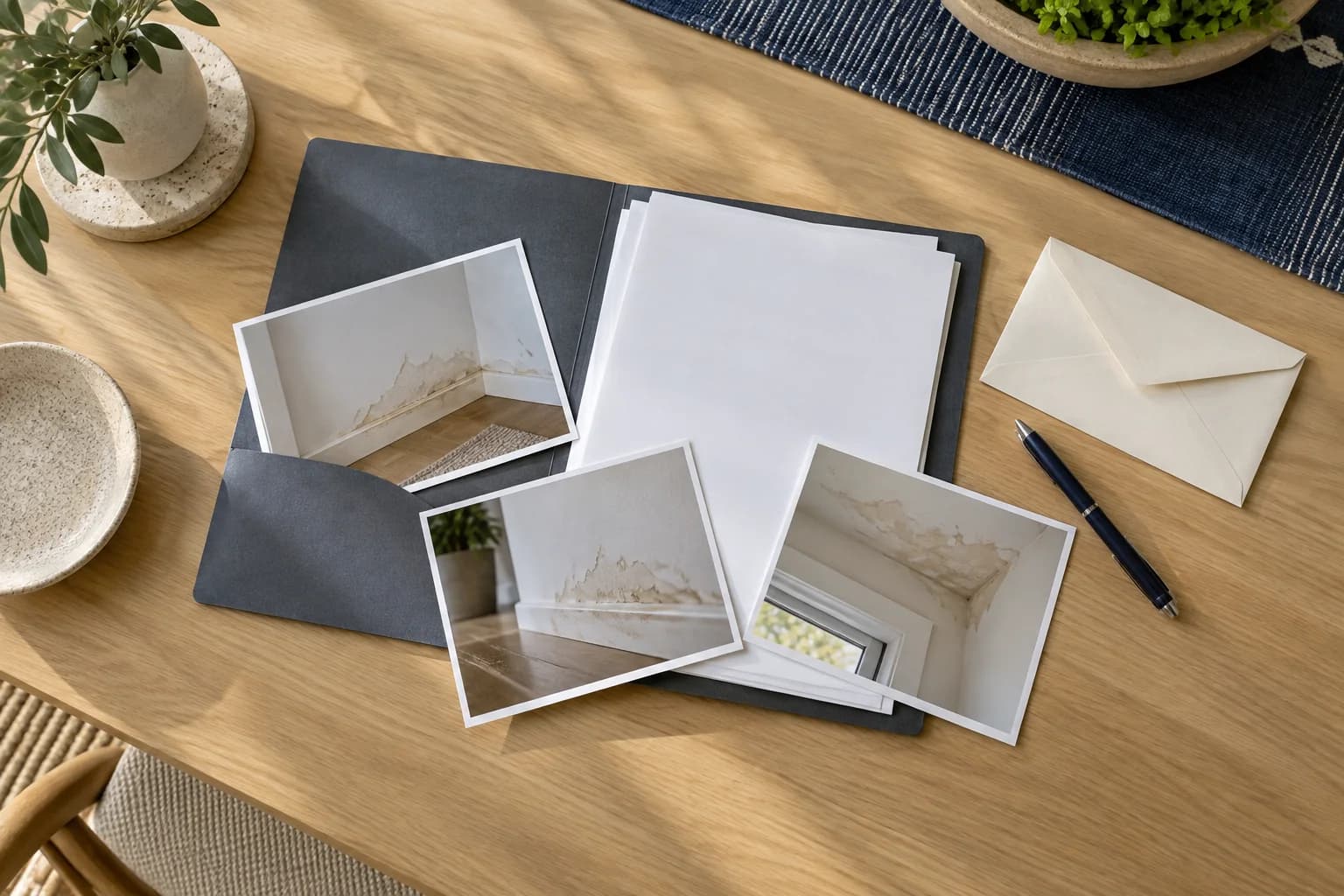
After water damage: If your home experienced water damage that may not have been fully dried—especially if professional restoration wasn't performed—testing can reveal whether mold has developed in hidden areas (behind walls, under flooring, in ceiling cavities).

Pre-purchase inspection: When buying a home in LA or Orange County, especially one with a history of water damage, professional mold testing provides objective data about indoor air quality that visual inspection alone cannot.

Post-remediation verification: After professional mold remediation, independent testing confirms that spore counts have returned to normal levels and the remediation was successful. This is always recommended and should be performed by a different company than the one that performed the remediation.

Landlord-tenant disputes: Objective third-party testing provides documented evidence of mold conditions that can resolve disputes about the existence or severity of mold problems.

What Types of Mold Testing Are Available?

How Does Air Sampling Work?

Air sampling is the most common and informative mold testing method. A calibrated air pump draws a measured volume of air through a collection device (typically a spore trap cassette) that captures airborne particles. The cassette is then sent to a certified mycological laboratory for analysis.

A standard air sampling protocol includes a minimum of two samples: one indoor sample from the area of concern and one outdoor sample to establish baseline conditions. The outdoor sample is critical because mold spores are naturally present in all outdoor air. Indoor mold levels are only concerning when they significantly exceed outdoor levels or when unusual species are present indoors that aren't found outside.

Additional indoor samples may be taken from multiple rooms to identify which areas have elevated levels, near HVAC returns to assess system contamination, and in areas with known water damage history.

Air sampling results report the types of mold spores detected (genus level), the concentration of each type (spores per cubic meter of air), and comparison between indoor and outdoor levels. A qualified inspector interprets these results in context—there's no single "safe" or "unsafe" number, as normal levels vary by location, season, and conditions.

How Does Surface Sampling Work?

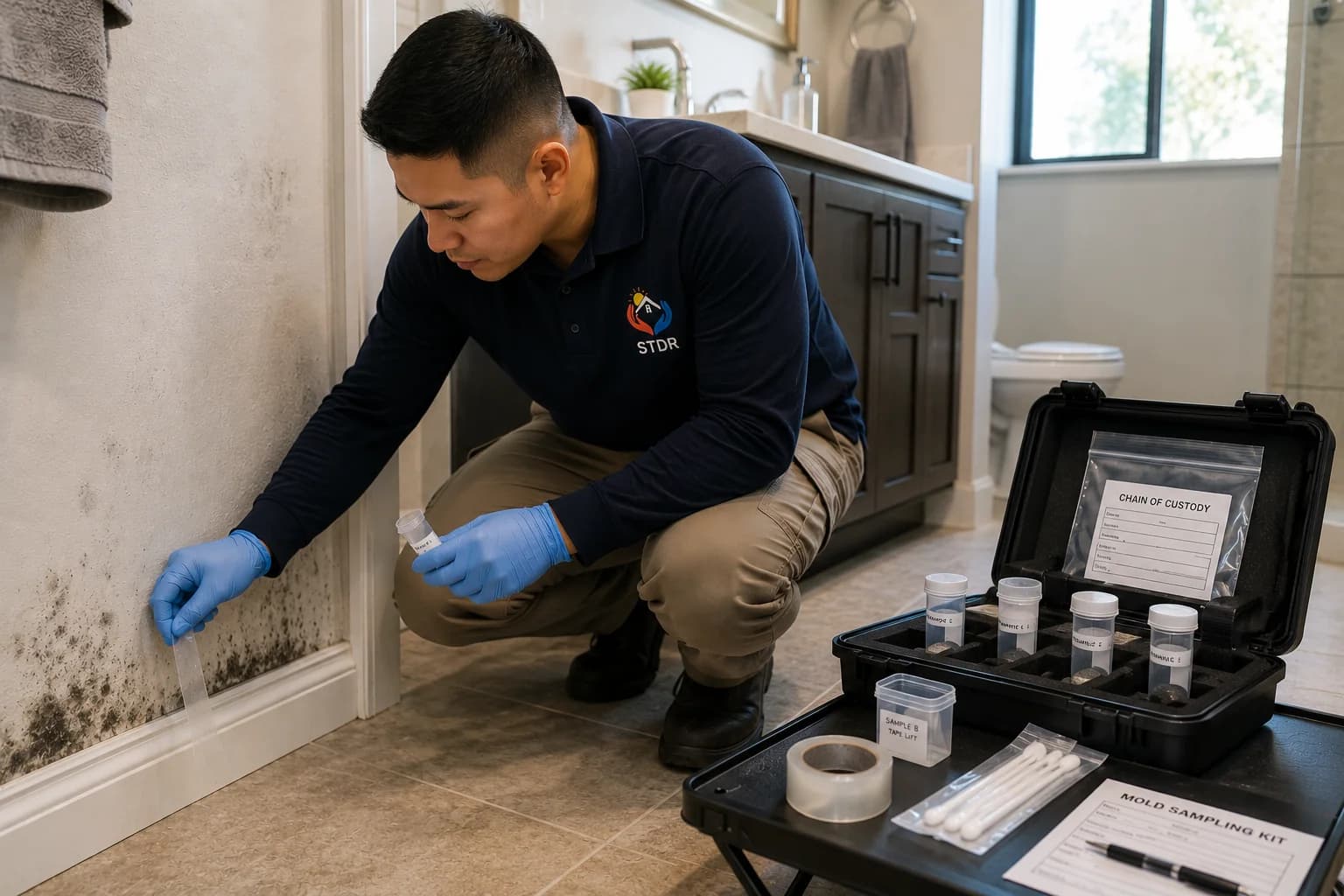
Surface sampling collects physical samples from visible or suspected mold growth for laboratory identification. Three methods are commonly used:

Tape lift: Clear adhesive tape is pressed against the surface, lifting mold material for microscopic examination. This is the most common method for visible mold—it's quick, non-destructive, and provides species identification.

Swab sampling: A sterile swab is rubbed across the surface to collect mold material. Useful for irregular surfaces where tape doesn't adhere well and when culturable (viable) analysis is needed.

Bulk sampling: A physical piece of the affected material (drywall, carpet, insulation) is cut and sent to the laboratory. This provides the most comprehensive analysis, showing mold penetration depth and species diversity within the material.

How Does ERMI/HERTSMI Testing Work?

Environmental Relative Moldiness Index (ERMI) testing uses DNA analysis of dust samples to identify 36 specific mold species and calculate a moldiness score for the home. ERMI is more sensitive than standard air sampling and can detect mold species even when airborne spore counts are low.

HERTSMI-2 (Health Effects Roster of Type Specific Formers of Mycotoxins and Inflammagens) is a subset of ERMI focusing on the 5 most clinically significant toxigenic species. HERTSMI-2 is often recommended by physicians evaluating patients for mold-related illness, particularly chronic inflammatory response syndrome (CIRS).

ERMI and HERTSMI testing is more expensive than standard air sampling ($300-$500 per sample) but provides deeper species-level detail that's valuable for health assessment and medical treatment decisions.

How Does Moisture Testing Support Mold Assessment?

Moisture testing is a critical component of any comprehensive mold assessment because it identifies conditions that support mold growth, even where mold isn't yet visible.

Pin-type moisture meters: Measure moisture content within building materials by electrical resistance. Readings above 15% in wood or 1% in drywall indicate conditions favorable for mold growth.

Pinless (non-invasive) moisture meters: Use electromagnetic signals to detect moisture behind surfaces without penetration. Useful for scanning large areas to identify hidden moisture patterns.

Thermal imaging cameras: Detect temperature variations that indicate moisture. Wet materials are cooler than surrounding dry materials due to evaporative cooling. Thermal imaging can reveal hidden water damage behind walls, above ceilings, and under flooring without demolition—guiding where to focus air and surface sampling.

Hygrometers: Measure relative humidity. Indoor readings consistently above 60% indicate conditions favorable for mold growth, even without a specific leak source.

Why Are Consumer Mold Test Kits Unreliable?

Home mold test kits sold at hardware stores typically involve placing a petri dish with growth medium in a room, waiting 24-48 hours, and observing whether mold grows on the dish. These kits have fundamental problems that make their results meaningless.

Mold spores are always present in indoor air—every kit will show growth, creating a false positive even in homes with perfectly normal mold levels. The kits don't quantify spore concentrations, so they can't distinguish between normal background levels and dangerously elevated levels. They don't compare indoor vs. outdoor levels, which is essential for determining whether indoor conditions are abnormal. They don't identify species reliably. Results are not reproducible or accepted by insurance companies, physicians, or legal proceedings.

Professional testing uses calibrated equipment, standardized protocols, certified laboratory analysis, and qualified interpretation—none of which consumer kits provide.

How Do You Choose a Qualified Mold Inspector?

Look for inspectors with certification from recognized organizations such as ACAC (American Council for Accredited Certification), IICRC, or state licensing where required. Verify that they carry professional liability insurance. Confirm they use accredited laboratories (AIHA-LAP LLC accredited, also known as EMLAP accredited). Ask about their sampling protocols—a minimum of one indoor and one outdoor sample is essential. Request sample reports to see how results are presented and interpreted.

For post-remediation verification, always use a different inspector than the company that performed the remediation. This independence ensures objectivity.

How Much Does Professional Mold Testing Cost in LA and Orange County?

Standard air sampling inspection (visual assessment plus 2-4 air samples with laboratory analysis) costs $300-$600. Additional air samples are typically $75-$150 each. Surface sampling (tape lift or swab with laboratory analysis) costs $75-$150 per sample. ERMI dust sampling with laboratory analysis costs $300-$500 per sample. Post-remediation verification testing runs $300-$500 depending on the number of samples.

These costs are separate from remediation. Some remediation companies, including Save The Day Restoration, offer free visual mold assessments and include initial inspection costs within the remediation project.

FAQ: Mold Testing

Q: How long does it take to get mold test results?
A: Standard spore trap analysis (non-viable): 1-3 business days from laboratory receipt. Culturable (viable) analysis: 7-14 days (requires growing cultures). ERMI/HERTSMI DNA analysis: 5-10 business days. Rush services are available from most laboratories for an additional fee.

Q: Can mold testing detect hidden mold behind walls?
A: Air sampling can detect elevated spore concentrations from hidden mold colonies. Thermal imaging and moisture mapping can identify the likely locations of hidden moisture and mold. Together, these methods effectively identify hidden mold without demolition, guiding where walls should be opened for visual confirmation and remediation.

Q: What do "normal" mold levels look like in air sample results?
A: There's no universal standard for "safe" mold levels. Results are interpreted by comparing indoor concentrations to outdoor baseline levels. Generally, indoor spore counts should be lower than or comparable to outdoor counts, indoor species should be similar to outdoor species, and no significant concentrations of toxigenic species should be present indoors that aren't found outdoors.

Q: Do I need mold testing before selling my home?
A: California law requires sellers to disclose known material defects, including mold. While testing isn't legally required for home sales, if you know about past water damage or mold issues, disclosure is mandatory. Pre-sale testing can provide documentation that issues were professionally remediated and current conditions are safe.

Q: Can my doctor order mold testing for my home?
A: Your doctor may recommend home mold testing as part of evaluating mold-related health symptoms, but they cannot order environmental testing directly. You would hire a mold inspector independently. Your doctor can order blood tests for mold sensitization and prescribe ERMI or HERTSMI testing protocols for your inspector to follow.

Q: Does Save The Day Restoration perform mold testing?
A: We provide comprehensive mold assessments including visual inspection, moisture mapping, and thermal imaging. For independent laboratory testing (air and surface sampling), we coordinate with certified third-party inspectors to ensure objectivity. For post-remediation verification, we always recommend independent testing by a separate company to confirm successful remediation.

Get Professional Mold Assessment

Don't rely on unreliable consumer kits or guesswork. Professional mold assessment gives you accurate, actionable information about your indoor environment.

Call Save The Day Restoration at (562) 246-9908 for a free visual mold assessment throughout Los Angeles and Orange County. If testing is warranted, we coordinate with certified third-party inspectors to provide objective, laboratory-verified results. If remediation is needed, we handle the entire process from assessment through reconstruction. IICRC-certified, licensed general contractor #1049188, direct insurance billing available.

Save The Day Team
Disaster restoration specialists

About Save The Day Restoration

Save The Day Restoration & Reconstruction is a locally owned disaster restoration company in Signal Hill, CA serving all of Los Angeles and Orange County. We handle water damage, fire damage, mold remediation, and licensed reconstruction. IICRC certified. Contractor #1049188. Call (562) 246-9908 anytime.

Damage needs immediate action

Call (562) 246-9908 for 24/7 emergency restoration. Licensed #1049188. Serving all of LA and Orange County.

+1 (562) 246-9908Get an Estimate

Get in touch

Tell us what's happening and we'll get back to you within the hour during business hours. For 24/7 emergencies, call (562) 246-9908.

Thank you! Your submission has been received!
Oops! Something went wrong while submitting the form.