
Crawl Space Water Damage
Crawl space water damage restoration removes standing water, dries structural materials, applies antimicrobial treatments, and installs vapor barriers or encapsulation systems in residential crawl spaces to prevent mold, wood rot, and structural deterioration.
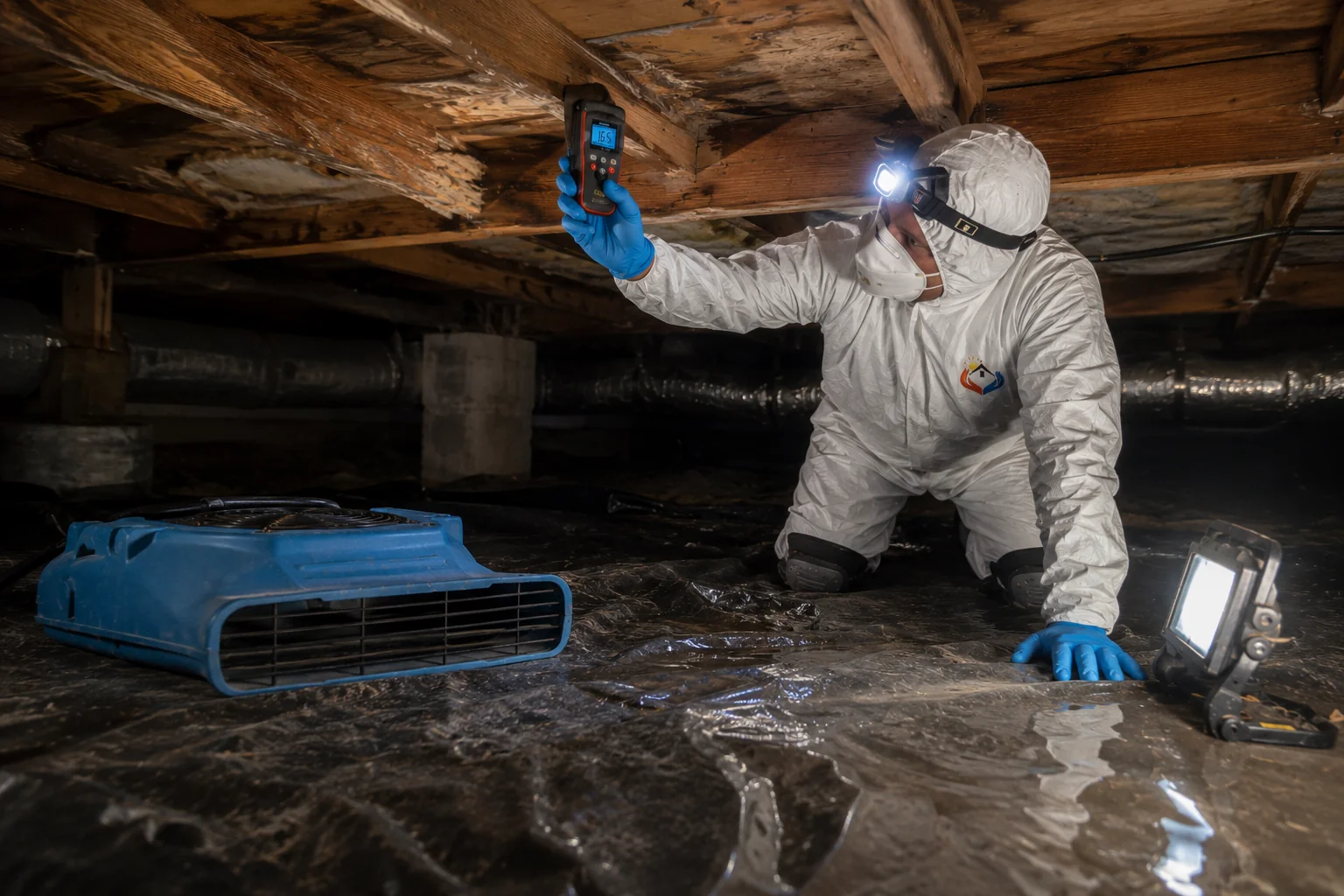
Crawl Space Water Damage Restoration in Los Angeles & Orange County
Quick Answer: Crawl space water damage is one of the most overlooked and destructive problems in Southern California homes. Standing water, excessive moisture, and poor ventilation in crawl spaces cause wood rot in floor joists and subfloor, mold growth that affects indoor air quality throughout the home, pest infestations, and foundation deterioration. Because crawl spaces are out of sight, damage often progresses for months or years before discovery. Professional crawl space restoration includes water removal, structural drying, mold remediation, wood repair or sistering, antimicrobial treatment, vapor barrier installation, and encapsulation to prevent recurrence. Save The Day Restoration provides crawl space water damage restoration throughout LA and Orange County. Call (562) 246-9908.
Why Is Crawl Space Water Damage So Destructive?
Crawl spaces are the worst possible environment for water damage. They combine the conditions that accelerate deterioration: darkness, warmth, poor ventilation, organic building materials (wood framing), and direct soil contact. When water enters a crawl space—whether from plumbing leaks, groundwater intrusion, or surface water drainage—it creates a perpetual moisture cycle. Water evaporates slowly in the enclosed space, raising humidity levels that keep wood framing and insulation damp even after standing water is gone.
The floor system above a wet crawl space—joists, blocking, rim joists, and subfloor—absorbs this moisture continuously. Wood moisture content rises above 20%, which is the threshold where wood-decay fungi begin breaking down the cellulose structure of the lumber. This is wood rot—and it progressively weakens structural members until they can no longer support the loads above them. Sagging floors, bouncy floors, and floors that slope toward the center of rooms are common signs of crawl space moisture damage to the floor system.
Simultaneously, mold colonizes the damp wood surfaces. Crawl space mold is particularly problematic because warm air rising from the crawl space (the stack effect) carries mold spores and mycotoxins into your living space through gaps in the floor system, around plumbing and electrical penetrations, and through HVAC ductwork running through the crawl space. Studies have shown that 40-50% of the air you breathe on the first floor of your home originates from the crawl space. If your crawl space has mold, you’re breathing it.
What Causes Crawl Space Water Problems in Southern California?
Plumbing Leaks
Supply lines, drain lines, and water heaters located in crawl spaces are common leak sources. Because crawl spaces are rarely inspected, these leaks can run for weeks or months. A dripping supply line at just one drop per second wastes over 3,000 gallons per year—all pooling in the crawl space and saturating framing above.
Poor Drainage and Grading
Properties where surface water drains toward the foundation rather than away from it allow rainwater to enter crawl spaces through foundation vents, through cracks in foundation walls, and by pooling against the foundation and seeping through. Improperly graded landscaping, missing or damaged gutters and downspouts, and hardscaped areas that direct runoff toward the home all contribute.
Groundwater Intrusion
During wet seasons, rising water tables can push moisture up through the crawl space floor. Properties near rivers, creeks, or in low-lying areas are most susceptible. Even without standing water, elevated groundwater raises crawl space humidity levels above the 60% threshold where wood begins absorbing excess moisture.
Inadequate Ventilation
Many older Southern California homes have insufficient crawl space ventilation—too few vents, blocked vents, or vents positioned ineffectively. Without adequate cross-ventilation, moisture from soil evaporation, minor plumbing leaks, and normal humidity has no way to escape. Humidity builds until every surface in the crawl space is damp.
Missing or Damaged Vapor Barriers
A vapor barrier (polyethylene sheeting laid over the soil) is the primary defense against ground moisture evaporation into the crawl space. Many older homes lack vapor barriers entirely, and those that have them often have damaged, deteriorated, or improperly installed barriers that no longer function. Exposed soil in a crawl space can release 10-15 gallons of moisture per day through evaporation in a typical-sized home.
What Are the Signs of Crawl Space Water Damage?
Because homeowners rarely enter their crawl spaces, damage often presents through indirect signs in the living space above. Sagging, bouncy, or uneven floors indicate weakened joists or subfloor. Musty or earthy odors on the first floor—especially noticeable when HVAC runs—suggest mold in the crawl space. Increased allergy symptoms, respiratory irritation, or asthma flare-ups among occupants can result from crawl space mold spores entering living spaces. Higher-than-normal humidity on the first floor despite AC operation indicates moisture rising from below. Pest activity (termites, carpenter ants, rodents) thrives in damp crawl spaces. Visible mold on first-floor baseboards or lower wall sections near the floor. Condensation on first-floor windows. Peeling paint or wallpaper at floor level.
What Does Crawl Space Water Damage Restoration Include?
Standing Water Removal
Submersible pumps and commercial extraction equipment remove standing water from the crawl space. For chronic water issues, temporary drainage may be installed to manage water during the restoration process. All debris, damaged materials, and contaminated insulation are removed from the crawl space.
Mold Remediation
If mold is present on framing, subfloor, or other crawl space surfaces (it almost always is with chronic moisture), full mold remediation is performed. This includes containment to prevent spore migration into the living space above, HEPA air filtration, removal of contaminated insulation and materials, aggressive cleaning and sanding of mold-colonized wood surfaces, and antimicrobial treatment of all structural surfaces. Independent post-remediation testing verifies successful cleanup.
Structural Assessment and Repair
All floor system components are inspected for structural integrity. Wood-decay fungi (wood rot) can compromise joist load-carrying capacity without visible exterior signs—a joist that looks solid on the surface may be significantly weakened internally. Damaged joists are repaired through sistering (installing a new joist alongside the damaged one), blocking, or replacement. Damaged subfloor sections are replaced. A structural engineer assessment may be recommended for extensive damage.
Structural Drying
Commercial dehumidifiers and air circulation equipment dry the crawl space and all structural materials to target moisture levels. Crawl space drying typically takes 5-14 days depending on the moisture volume and ventilation conditions. Daily monitoring with calibrated moisture meters tracks progress and documents the process.
Vapor Barrier Installation
A heavy-duty polyethylene vapor barrier (minimum 6-mil, 12-20 mil recommended) is installed over the entire crawl space floor, overlapping seams by 12 inches and sealed with waterproof tape. The barrier extends up foundation walls and is attached with mechanical fasteners. This prevents ground moisture from evaporating into the crawl space—eliminating the primary moisture source for most crawl space problems.
Full Encapsulation (Recommended)
For comprehensive protection, crawl space encapsulation seals the entire crawl space from exterior moisture. This includes a heavy-duty liner (typically 20-mil reinforced polyethylene) covering the floor and walls, sealed foundation vents (eliminating exterior humidity infiltration), a dedicated dehumidifier to maintain humidity below 50%, insulated crawl space walls (rather than floor insulation), and sealed penetrations around pipes, ducts, and wiring. Encapsulated crawl spaces maintain consistent low humidity year-round, eliminating the conditions that cause mold, wood rot, and pest problems. Encapsulation also improves energy efficiency by reducing moisture-related heat transfer through the floor system.
How Much Does Crawl Space Restoration Cost?
Water removal and basic drying: $1,500-$4,000. Mold remediation in crawl space: $3,000-$10,000 depending on extent. Structural repairs (joist sistering, subfloor replacement): $2,000-$8,000. Vapor barrier installation: $1,500-$3,500. Full encapsulation with dehumidifier: $5,000-$15,000. Complete crawl space restoration (water removal, mold remediation, structural repair, and encapsulation): $8,000-$25,000+ depending on scope.
Does Insurance Cover Crawl Space Water Damage?
Insurance coverage depends on the water source. Sudden plumbing failures (burst pipes, water heater rupture) causing crawl space water damage are typically covered—including extraction, drying, mold remediation, and structural repair. Gradual moisture problems from poor drainage, inadequate ventilation, and ground moisture are typically NOT covered, as insurers consider these maintenance issues. If a covered plumbing event caused the crawl space water damage, Save The Day Restoration documents the connection between the covered event and resulting damage to support your claim.
How Long Does Crawl Space Restoration Take?
Water removal and initial cleanup: 1-2 days. Mold remediation: 3-7 days. Structural drying: 5-14 days. Structural repairs: 2-5 days. Vapor barrier or encapsulation: 1-3 days. Total timeline: 2-5 weeks for comprehensive crawl space restoration. Projects with extensive mold or structural damage may take 4-8 weeks.
Crawl space water intrusion is a persistent issue throughout Southern California, particularly in areas with high water tables or seasonal drainage challenges. Our crawl space restoration crews are regularly dispatched to Long Beach, Redondo Beach, and Huntington Beach, where coastal proximity elevates groundwater levels beneath slab-on-grade and raised-foundation homes. Inland communities like Downey, Norwalk, and Fullerton face crawl space flooding from storm runoff and aging municipal drainage systems. Hillside properties in Pasadena and Santa Clarita are especially vulnerable during heavy rains when saturated soil directs water beneath foundations.
FAQ: Crawl Space Water Damage
Q: How do I know if my crawl space has water damage?
A: Signs include sagging or bouncy floors, musty odors on the first floor, increased allergy or respiratory symptoms, visible mold near floor level, and pest activity. If you suspect crawl space problems, professional inspection with moisture testing is the only way to assess the full extent of damage without entering the space yourself.
Q: Is crawl space mold dangerous to my family?
A: Yes. Studies show 40-50% of first-floor air originates from the crawl space via the stack effect. Mold spores, mycotoxins, and musty volatile organic compounds from crawl space mold directly impact indoor air quality above. Children, elderly, and those with respiratory conditions or allergies are most affected.
Q: What is crawl space encapsulation?
A: Encapsulation seals the crawl space from exterior moisture using a heavy-duty liner on floors and walls, sealed foundation vents, wall insulation, and a dedicated dehumidifier. It creates a controlled environment that prevents mold, wood rot, pest problems, and moisture damage permanently. Encapsulation is the gold standard for crawl space moisture management.
Q: Should I install a vapor barrier or do full encapsulation?
A: A vapor barrier addresses ground moisture only. Full encapsulation addresses ground moisture, exterior humidity, and maintains controlled humidity with a dehumidifier. For homes with chronic crawl space problems or in areas with elevated humidity, encapsulation provides significantly better long-term protection and is the recommended approach.
Q: Can I inspect my crawl space myself?
A: Exercise caution. Crawl spaces may contain standing water, mold contamination, pest infestations, electrical hazards, sharp objects, and limited ventilation. Wear protective clothing, a respirator, gloves, and use a flashlight. If you see standing water, extensive mold, or structural damage, exit and call a professional. For most homeowners, professional inspection is safer and more thorough.
Our Crawl Space Restoration Process Includes:
01
Professional Crawl Space Inspection & Moisture Assessment
Our technicians inspect your crawl space for standing water, moisture levels, mold growth, and structural damage. Confined-space trained crews work safely in restricted areas.
02
Standing Water Removal & Debris Cleanup
Standing water and accumulated debris are removed from the crawl space. We clear the area completely to assess the full extent of moisture damage and mold contamination.
03
Mold Remediation with HEPA Containment
Full containment is established with HEPA filtration when mold is present. Our technicians remove mold from floor joists, subfloor, and all affected crawl space surfaces.
04
Structural Assessment & Joist Repair
Floor joists, support posts, and rim joists are inspected for rot, fungal decay, and structural compromise. Damaged members are sistered or replaced to restore structural integrity.
05
Commercial Structural Drying & Dehumidification
Commercial dehumidifiers and targeted air movers dry crawl space framing and soil. We monitor moisture levels until all materials reach safe thresholds.
06
Antimicrobial Treatment of All Surfaces
Antimicrobial solutions are applied to all wood surfaces to kill residual mold and prevent regrowth. This treatment creates a hostile environment for future fungal colonization.
07
Vapor Barrier Installation
Heavy-duty vapor barrier material is installed across the crawl space floor and up foundation walls. Proper vapor barriers dramatically reduce future moisture intrusion.
08
Full Crawl Space Encapsulation (Optional)
Full encapsulation seals your crawl space from ground moisture with commercial-grade vapor barrier, sealed seams, and optional dehumidifier installation for long-term protection.
What we handle
Specialized services for your specific damage

Flood Damage Restoration
Professional flood damage cleanup and restoration for homes and businesses after natural flooding events in Southern California

Crawl Space Water Damage
Professional crawl space water removal, drying, mold prevention, and encapsulation for homes across LA & Orange County

Burst Pipe Restoration
Emergency burst pipe water damage restoration with rapid extraction, structural drying, and full repair across LA & Orange County

Appliance Leak Water Damage
Water damage restoration from washing machine, dishwasher, water heater, and refrigerator leaks and failures
We work with all major insurance carriers






CITIES WHERE THIS SERVICE IS AVAILABLE
Same certified technicians, same fast response — wherever you are in LA or Orange County. Select your city to see local details and schedule service.
WHERE WE OFFER THIS SERVICE
24/7 emergency response across Los Angeles and Orange County. Click your city for local service details and response times.

Common Questions
Common questions about this service
Signs include sagging or bouncy floors, musty odors on the first floor, increased allergy or respiratory symptoms, visible mold near floor level, and pest activity. If you suspect crawl space problems, professional inspection with moisture testing is the only way to assess the full extent of damage without entering the space yourself.
Yes. Studies show 40-50% of first-floor air originates from the crawl space via the stack effect. Mold spores, mycotoxins, and musty volatile organic compounds from crawl space mold directly impact indoor air quality above. Children, elderly, and those with respiratory conditions or allergies are most affected.
Encapsulation seals the crawl space from exterior moisture using a heavy-duty liner on floors and walls, sealed foundation vents, wall insulation, and a dedicated dehumidifier. It creates a controlled environment that prevents mold, wood rot, pest problems, and moisture damage permanently. Encapsulation is the gold standard for crawl space moisture management.
A vapor barrier addresses ground moisture only. Full encapsulation addresses ground moisture, exterior humidity, and maintains controlled humidity with a dehumidifier. For homes with chronic crawl space problems or in areas with elevated humidity, encapsulation provides significantly better long-term protection and is the recommended approach.
Exercise caution. Crawl spaces may contain standing water, mold contamination, pest infestations, electrical hazards, sharp objects, and limited ventilation. Wear protective clothing, a respirator, gloves, and use a flashlight. If you see standing water, extensive mold, or structural damage, exit and call a professional. For most homeowners, professional inspection is safer and more thorough.
Need more answers?
Reach out anytime
Damage is happening right now
Call (562) 246-9908 now. Licensed #1049188. IICRC certified. We're dispatching immediately.
