
Slab Leak Detection & Repair
Slab leak detection and repair identifies and resolves water leaks in supply or drain lines running beneath or within concrete slab foundations using electronic leak detection, thermal imaging, and acoustic methods, followed by professional water damage restoration of affected flooring, walls, and structural materials.
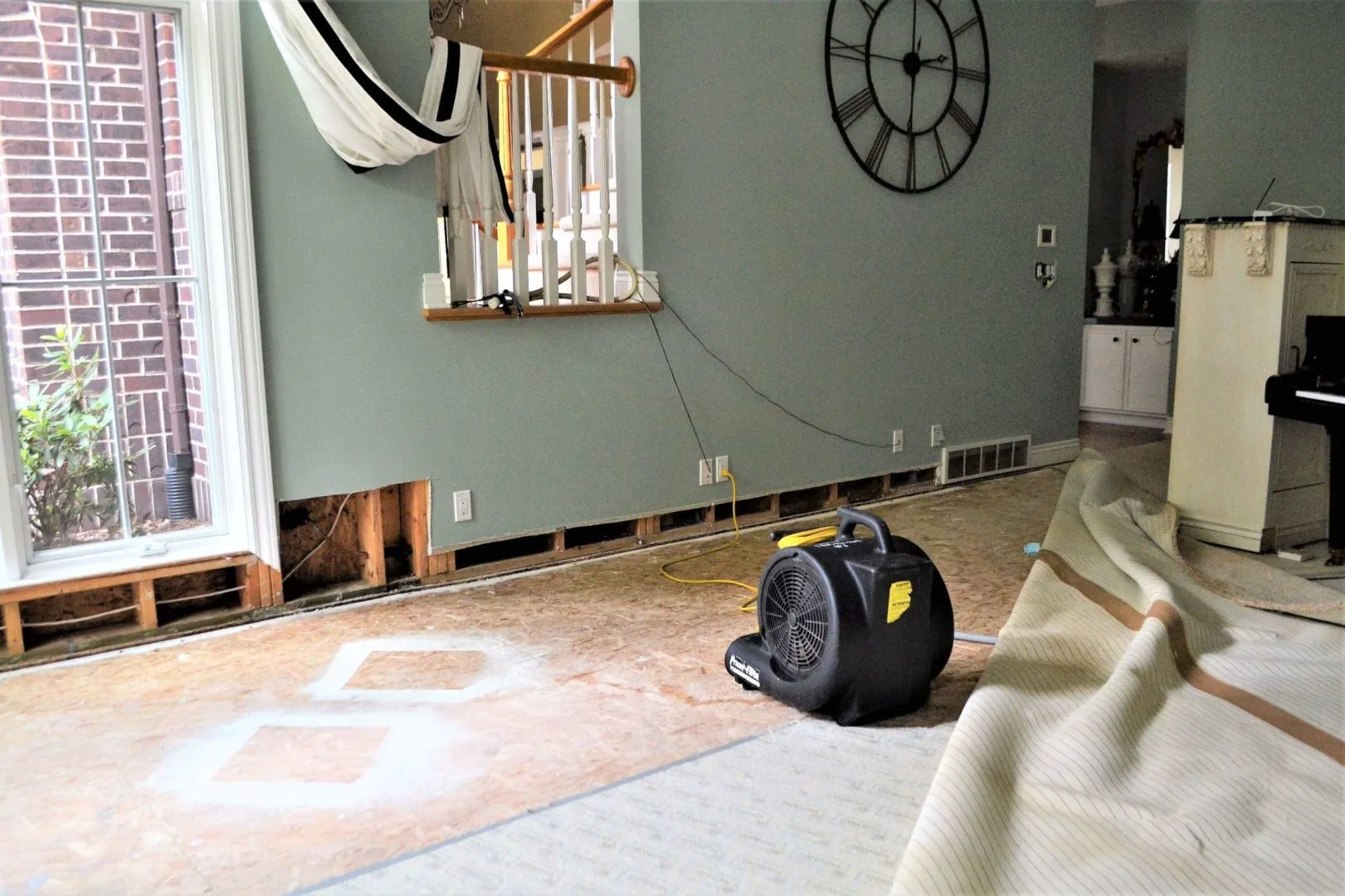
Slab Leak Detection & Water Damage Restoration in Los Angeles & Orange County
Quick Answer: A slab leak is a water leak in the supply or drain lines running beneath or within your home's concrete slab foundation. Slab leaks are one of the most common and damaging plumbing failures in Southern California homes—particularly in properties built between the 1950s and 1990s with copper supply lines that corrode over decades. Signs include unexplained water bill increases, warm spots on floors, the sound of running water when all fixtures are off, and damp or buckled flooring. Professional slab leak detection uses electronic amplification, thermal imaging, and pressure testing to pinpoint the leak location without unnecessary demolition. Save The Day Restoration provides complete slab leak detection, water damage restoration, and reconstruction throughout LA and Orange County. Call (562) 246-9908.
Why Are Slab Leaks So Common in Southern California?
Southern California's housing stock is uniquely vulnerable to slab leaks. The majority of homes in LA and Orange County are built on concrete slab foundations (as opposed to basements or crawl spaces common in other regions). Water supply lines and drain lines are embedded in or routed beneath these slabs during construction. Over decades, multiple factors cause these buried pipes to fail.
Copper Pipe Corrosion
Copper supply lines were the standard plumbing material for Southern California homes from the 1950s through the 1990s. While copper is durable, it is not permanent. The region's water chemistry—mineral content, pH levels, and dissolved solids—creates electrochemical conditions that slowly corrode copper from the inside out. This internal corrosion (called pitting corrosion) creates pinhole leaks that start small and worsen over time. Homes with copper supply lines older than 25-30 years are in the high-risk zone for slab leaks.
Soil Chemistry and Electrolysis
Southern California's alkaline soils create an external corrosion environment for copper pipes. When copper contacts certain soil minerals, galvanic corrosion (electrolysis) attacks the pipe from the outside. Pipes resting directly on rebar, metal hangers, or dissimilar metals within the slab experience accelerated corrosion at contact points. This external attack combined with internal water chemistry corrosion creates a two-front failure mechanism unique to slab-on-grade construction.
Soil Expansion and Contraction
The expansive clay soils prevalent throughout LA and Orange County swell during wet seasons and shrink during dry periods. This seasonal movement applies pressure to pipes running through the soil, stressing joints and fittings. Over years, this repeated stress weakens connections and can shift pipes enough to create leaks. Homes on hillsides or in areas with significant fill soil face elevated risk.
Water Pressure and Water Hammer
High municipal water pressure (common in many LA and OC neighborhoods) and water hammer events accelerate pipe fatigue. Supply lines under constant high pressure develop leaks at weakened points faster than those at moderate pressure. Installing and maintaining a pressure reducing valve (PRV) at the main significantly reduces slab leak risk.
What Are the Warning Signs of a Slab Leak?
Slab leaks often run undetected for weeks or months before visible signs appear. Early detection saves thousands in restoration costs.
Unexplained water bill increase: A supply-side slab leak runs 24/7 whether you're using water or not. Even a small pinhole leak can waste 1,000-5,000+ gallons per month. If your water bill increases $50-$200+ without a change in usage, a slab leak is a likely cause.
Sound of running water: When all faucets, appliances, and fixtures are off, listen near the floor for the sound of water flowing or hissing. Supply-side slab leaks under pressure produce audible sound that can be heard through the slab in quiet conditions.
Warm or hot spots on floors: Hot water supply line leaks release heated water beneath the slab, creating noticeable warm areas on tile, hardwood, or concrete floors. Walk barefoot across your floors—localized warm spots indicate a hot water slab leak beneath.
Damp, buckled, or damaged flooring: Moisture migrating up through the slab causes carpet to feel damp, hardwood to warp or cup, laminate to buckle, and tile grout to deteriorate. Baseboards may show moisture staining at floor level.
Mold or mildew odors: Chronic moisture from an undetected slab leak creates conditions for mold growth beneath flooring, behind baseboards, and in lower wall cavities. Musty odors at floor level—especially in specific rooms—suggest moisture intrusion from below.
Foundation cracks or shifting: Significant slab leaks can erode soil beneath the foundation, causing differential settlement. New cracks in the slab, uneven floors, and doors that suddenly stick may indicate soil erosion from a substantial leak.
Meter test: Turn off all water inside and outside your home. Check your water meter. If the low-flow indicator (small triangle or dial) is still moving, water is flowing somewhere in your system—likely a slab leak.
How Are Slab Leaks Detected?
Professional slab leak detection locates the exact leak position without unnecessary demolition. Modern detection technology pinpoints leaks to within inches, minimizing the area that needs to be accessed for repair.
Electronic Leak Detection
Highly sensitive acoustic equipment amplifies the sound of water escaping from pressurized pipes beneath the slab. Technicians use ground microphones and listening devices to trace the sound of the leak through concrete, identifying the precise location. Different frequencies and amplification levels distinguish between leak sounds, ambient noise, and water flow in intact pipes.
Thermal Imaging
Infrared cameras detect temperature variations on the slab surface caused by water leaking beneath. Hot water leaks create warm signatures visible through flooring. Cold water leaks and drain leaks create cooler temperature patterns where evaporation occurs. Thermal imaging provides a visual map of the leak's location and spread pattern.
Pressure Testing
Static pressure tests isolate supply lines to confirm whether the leak is on the hot side, cold side, or both. The system is pressurized and monitored—pressure drop rate indicates leak severity. This test also rules out fixture leaks, toilet flappers, and other above-slab sources that could mimic slab leak symptoms.
Video Camera Inspection
For drain line slab leaks, specialized sewer cameras are fed through the drain system to visually inspect pipe condition, identify breaks, root intrusion, and joint failures. Camera inspection provides exact location (measured from the cleanout) and documents pipe condition for repair planning.
What Does Slab Leak Damage Restoration Include?
Leak Repair Options
Once located, the slab leak is repaired through one of several methods depending on pipe condition, location, and the number of leaks present. Spot repair accesses the specific leak through the slab, cuts out the damaged section, and splices new pipe—appropriate when one isolated leak exists and the remaining pipe is in reasonable condition. Reroute/repipe abandons the damaged pipe in the slab and routes new supply lines through the attic or walls—recommended when pipe condition suggests additional leaks are likely or when the leak location makes spot repair impractical. Epoxy lining coats the interior of existing pipes with epoxy resin—a less invasive option for certain pipe conditions but not universally applicable.
Water Damage Assessment and Restoration
After the leak is repaired, the water damage restoration process addresses all moisture-affected materials. Thermal imaging and moisture meters map the extent of water migration through and above the slab. Damaged flooring is removed—the specific materials depend on flooring type and moisture levels. Affected baseboards and lower drywall sections are removed (moisture from slab leaks wicks up into wall cavities, typically affecting the bottom 12-24 inches of drywall). Wet insulation in affected wall cavities is removed.
Structural Drying
The slab itself must be dried to acceptable moisture levels before new flooring can be installed. Slab drying uses specialty equipment—including floor mat drying systems that create sealed drying chambers on the concrete surface and forced air injection systems for wall cavities. Slab drying can take 5-14 days depending on the duration of the leak and the volume of moisture absorbed. Concrete is porous and holds moisture tenaciously—surface dryness does not indicate internal dryness. Moisture meters and relative humidity testing verify when the slab has reached acceptable levels for flooring installation.
Mold Inspection and Prevention
Chronic slab leaks are one of the most common causes of hidden mold in Southern California homes. Moisture migrating up through the slab creates ideal mold conditions beneath flooring, behind baseboards, and in lower wall cavities—areas that are warm, damp, dark, and undisturbed. If the slab leak has been active for more than a few weeks, mold inspection of all affected areas is strongly recommended. Antimicrobial treatments are applied to all exposed surfaces during restoration regardless.
Reconstruction
Reconstruction replaces all removed materials: new flooring throughout affected areas (matching existing flooring in adjacent unaffected areas), new drywall with texture matching, painting, baseboards, trim, and any fixtures or finishes that were removed. If flooring in the damaged area cannot be matched to undamaged adjacent flooring, insurance may cover replacing the larger continuous area to achieve a uniform appearance.
How Much Does Slab Leak Detection and Restoration Cost?
Slab leak detection: $250-$500 for professional electronic detection. Spot repair through slab: $800-$2,500 for the plumbing repair itself. Partial or whole-house repipe: $3,000-$10,000+ depending on home size and pipe routing. Water damage restoration (minor, caught early): $2,000-$5,000. Water damage restoration (moderate, extended leak): $5,000-$15,000. Water damage restoration (major, months-long leak with mold): $15,000-$40,000+ including mold remediation and extensive reconstruction.
The total cost of a slab leak event—detection, plumbing repair, water damage restoration, and reconstruction—ranges from $3,000-$8,000 for a small leak caught quickly to $20,000-$50,000+ for a chronic leak with mold and extensive flooring replacement.
Does Insurance Cover Slab Leak Damage?
Insurance coverage for slab leaks has important distinctions. Most homeowner's policies cover the resulting water damage—extraction, drying, material removal, mold prevention, and reconstruction of damaged flooring, walls, and finishes. This is the largest cost component and is typically covered in full under your dwelling coverage.
The plumbing repair itself (the actual pipe fix or repipe) is generally NOT covered, as insurers classify pipe repair as maintenance. However, the cost of accessing the pipe—cutting through the slab, removing flooring to reach the repair area—is typically covered as part of the restoration scope.
Leak detection costs may or may not be covered depending on your specific policy. Save The Day Restoration documents all costs and their relationship to the covered water damage to support your insurance claim.
How Long Does Slab Leak Restoration Take?
Detection and plumbing repair: 1-3 days. Water damage restoration and slab drying: 1-3 weeks (slab drying is the longest phase). Reconstruction: 1-3 weeks depending on flooring type and scope. Total timeline: 2-6 weeks for most slab leak projects. Chronic leaks with mold involvement may extend to 6-10 weeks including remediation.
Slab leaks are disproportionately common in communities with post-war housing built on copper supply lines that have now exceeded their expected lifespan. Our detection teams handle frequent slab leak calls in Alhambra, Fullerton, and Buena Park, where 1950s and 1960s construction used copper pipes now vulnerable to pinhole corrosion and electrolysis. Downey and Long Beach properties on expansive clay soils experience slab movement that stresses under-slab plumbing connections. We also respond regularly to slab leak emergencies in Bellflower, Norwalk, Huntington Beach, and Redondo Beach, where shifting soil conditions and mineral-rich water supplies accelerate pipe deterioration.
FAQ: Slab Leak Detection & Repair
Q: How do I know if I have a slab leak?
A: Common signs include unexplained water bill increases, the sound of running water when fixtures are off, warm spots on floors (hot water line leaks), damp or damaged flooring, and musty odors at floor level. Turn off all water and check your meter—if the low-flow indicator is still moving, water is flowing somewhere in your system.
Q: Are slab leaks covered by homeowner's insurance?
A: The resulting water damage (flooring, drywall, mold prevention, reconstruction) is typically covered. The plumbing repair itself is generally not covered. The cost of accessing the pipe through the slab is usually covered as part of the restoration. Save The Day Restoration documents all costs to support your insurance claim.
Q: Should I repipe my whole house or just fix the one leak?
A: If your home has copper supply lines over 25-30 years old and you've had one slab leak, additional leaks are statistically likely. Repiping eliminates future slab leak risk entirely by routing new lines through accessible attic or wall spaces. Spot repair is appropriate for newer plumbing with an isolated failure. Your plumber can assess overall pipe condition to recommend the best approach.
Q: Can a slab leak damage my foundation?
A: Yes. Significant or prolonged slab leaks can erode soil beneath the foundation, causing differential settlement, cracking, and structural shifting. Signs include new foundation cracks, uneven floors, and doors or windows that suddenly stick. If you suspect foundation involvement, a structural engineer assessment is recommended.
Q: How long can a slab leak go undetected?
A: Slab leaks frequently run undetected for weeks to months. Small pinhole leaks may only become apparent through gradually increasing water bills. Larger leaks may not show visible signs for weeks because concrete absorbs significant moisture before it migrates to the surface. Regular monitoring of your water bill and periodic meter checks are the best early detection methods.
Our Slab Leak Detection & Restoration Process Includes:
01
Electronic Leak Detection & Thermal Imaging
Non-invasive electronic leak detection and thermal imaging pinpoint the exact location of your slab leak without unnecessary demolition. We find it before we dig.
02
Pressure Testing & Leak Source Identification
Pressure testing confirms the leak source and verifies no additional leaks exist in the system. We isolate the exact pipe segment causing water intrusion beneath your foundation.
03
Professional Plumbing Repair or Reroute
Licensed plumbers repair or reroute the failed pipe section. We recommend the best approach based on pipe condition, accessibility, and long-term reliability.
04
Moisture Mapping & Water Damage Assessment
Thermal imaging and moisture meters map the full extent of water damage caused by the slab leak. Many slab leaks cause hidden damage far beyond the visible wet area.
05
Damaged Flooring & Material Removal
Saturated flooring, carpet padding, and damaged materials are carefully removed. We preserve undamaged materials whenever possible to minimize reconstruction scope.
06
Specialty Slab Drying & Dehumidification
Specialty slab drying equipment directs warm, dry air beneath flooring and into the concrete slab. Commercial dehumidifiers maintain optimal conditions for thorough drying.
07
Mold Inspection & Antimicrobial Treatment
Standing moisture beneath slabs creates ideal mold conditions. We inspect for mold growth, apply antimicrobial treatments, and verify the environment is safe before rebuilding.
08
Complete Flooring & Interior Reconstruction
New flooring, baseboards, and interior finishes are installed to match your existing home. We handle everything from tile and hardwood to carpet and trim work.
What we handle
Specialized services for your specific damage

Flood Damage Restoration
Professional flood damage cleanup and restoration for homes and businesses after natural flooding events in Southern California

Crawl Space Water Damage
Professional crawl space water removal, drying, mold prevention, and encapsulation for homes across LA & Orange County

Burst Pipe Restoration
Emergency burst pipe water damage restoration with rapid extraction, structural drying, and full repair across LA & Orange County

Appliance Leak Water Damage
Water damage restoration from washing machine, dishwasher, water heater, and refrigerator leaks and failures
We work with all major insurance carriers






CITIES WHERE THIS SERVICE IS AVAILABLE
Same certified technicians, same fast response — wherever you are in LA or Orange County. Select your city to see local details and schedule service.



WHERE WE OFFER THIS SERVICE
24/7 emergency response across Los Angeles and Orange County. Click your city for local service details and response times.

Common Questions
Common questions about this service
Common signs include unexplained water bill increases, the sound of running water when fixtures are off, warm spots on floors (hot water line leaks), damp or damaged flooring, and musty odors at floor level. Turn off all water and check your meter—if the low-flow indicator is still moving, water is flowing somewhere in your system.
The resulting water damage (flooring, drywall, mold prevention, reconstruction) is typically covered. The plumbing repair itself is generally not covered. The cost of accessing the pipe through the slab is usually covered as part of the restoration. Save The Day Restoration documents all costs to support your insurance claim.
If your home has copper supply lines over 25-30 years old and you've had one slab leak, additional leaks are statistically likely. Repiping eliminates future slab leak risk entirely by routing new lines through accessible attic or wall spaces. Spot repair is appropriate for newer plumbing with an isolated failure. Your plumber can assess overall pipe condition to recommend the best approach.
Yes. Significant or prolonged slab leaks can erode soil beneath the foundation, causing differential settlement, cracking, and structural shifting. Signs include new foundation cracks, uneven floors, and doors or windows that suddenly stick. If you suspect foundation involvement, a structural engineer assessment is recommended.
Slab leaks frequently run undetected for weeks to months. Small pinhole leaks may only become apparent through gradually increasing water bills. Larger leaks may not show visible signs for weeks because concrete absorbs significant moisture before it migrates to the surface. Regular monitoring of your water bill and periodic meter checks are the best early detection methods.
Need more answers?
Reach out anytime
Damage is happening right now
Call (562) 246-9908 now. Licensed #1049188. IICRC certified. We're dispatching immediately.
