In this guide
Earthquake planning should include water shutoff locations, emergency contacts, and a safe response to damaged plumbing. After shaking, avoid electrical and structural hazards before investigating a leak.
Keep it handy
A free printable for this guide
Save a copy for your fridge or binder. No email needed.
Our household emergency plan
A fill-in contact sheet with meeting places, utility contacts and who helps whom.
Read the checklist online
Fill this in together, share a copy and review it when contact details or household needs change.
For immediate danger, leave the area and call 911. Follow emergency officials' directions before returning.
Make the plan familiar
- Choose a local meeting place and an out-of-area contact. Practise how everyone will reconnect.
- Plan support for children, pets and anyone with mobility, communication or medical needs.
- Know where the water shutoff is. Ask your utility about safe procedures before an emergency.
Space to fill in
- Household contact / phone
- Out-of-area contact / phone
- Nearby meeting place
- Backup meeting place / address
- Children / pets / assistance plan
- Water shutoff location
- Water utility / gas utility contacts
- Electric utility / property manager
- Emergency supplies / keys location
Reference guidance
Make it your own
Prepare together
Household emergency plan
Put your contacts, meeting places, pet needs and utility locations on one personal fridge sheet.
Make your fridge sheetEarthquake Preparedness: Protecting Your SoCal Home from Water Line Breaks
Southern California homes face significant seismic risk, and earthquakes are one of the leading causes of hidden water damage that can compromise your property's structural integrity. When seismic activity strikes Signal Hill, Long Beach, or elsewhere in LA and Orange Counties, water line breaks, burst pipes, and gas line ruptures often occur simultaneously—creating catastrophic water damage that extends far beyond visible cracks. Understanding how earthquakes damage your plumbing system and knowing the immediate inspection steps to take can mean the difference between minor repairs and tens of thousands of dollars in water damage restoration.
How Earthquakes Damage Residential Plumbing Systems
Earthquakes pose multiple threats to the plumbing infrastructure beneath and within Southern California homes. The most common damage occurs through three primary mechanisms: water heater displacement, slab foundation shifts, and ground liquefaction.
Water heaters are particularly vulnerable during seismic events. Most California homes have tank-style water heaters that can topple during ground shaking, severing water and gas connections instantly. A falling water heater can cause flooding in your home within minutes, overwhelming crawl spaces and causing extensive water damage to adjacent areas. Under California law (Title 24), water heaters installed after 2010 must be secured to withstand seismic forces, but older homes may have unsecured units that pose serious risks.
Slab foundation shifts present another critical issue in our region. SoCal's geology includes active fault lines and soil composition prone to shifting. When the ground moves, even slightly, it can crack buried water and sewer lines that run beneath your home's foundation. These cracks may not be immediately visible, but they allow water to saturate the soil beneath your home, causing settling, mold growth, and structural instability over time.
Gas line ruptures during earthquakes create dual hazards: the immediate risk of a gas leak and potential explosions, plus water damage when emergency services shut off the water supply or when the fire department uses high-pressure hoses to suppress resulting fires. The combination of fire damage and water damage from emergency response is particularly devastating to homes in earthquake zones.
SoCal Seismic Risk Zones and What It Means for Your Home
Southern California's position along the San Andreas Fault and numerous secondary fault lines makes this region one of the most seismically active in the nation. Signal Hill itself sits in an area of elevated seismic risk, as do major portions of LA County and Orange County. The USGS estimates a 72% probability of at least one magnitude 6.7 or greater earthquake striking Southern California in the next 30 years.
This isn't abstract risk—it's a practical consideration for every homeowner. Recent seismic activity, including the 2024 swarm of earthquakes in the region, has reminded residents that "the big one" isn't just a hypothetical. Your home's plumbing system is a critical infrastructure component that requires proactive protection.
Coastal homes in Long Beach, Huntington Beach, and Newport Beach face additional concerns because soil liquefaction—where saturated ground loses its strength during shaking—is more prevalent in areas with higher water tables and sandy soil composition. This amplifies plumbing damage and foundation settlement.
Immediate Post-Earthquake Inspection Steps Every Homeowner Should Take
Within the first few hours after significant seismic activity, taking the right inspection steps can prevent massive water damage. Here's what to do:
Step 1: Check Your Water Meter. If the earthquake caused no visible plumbing damage but your water meter is still running, you have a leak. Turn off the main water shut-off valve (typically located where the water line enters your home from the street) and call a professional plumber immediately. Running water is actively causing damage.
Step 2: Inspect Visible Water Heater Connections. If you have access to your water heater (in a garage, utility room, or outside), check that all connections are intact and no water is leaking. If you see water pooling or smell gas, immediately leave the home and call emergency services.
Step 3: Look for Foundation Cracks. Check your home's foundation for new cracks, especially in the concrete slab visible in the garage or basement. Stair-step cracks in the foundation are particularly concerning and indicate differential settlement from plumbing damage beneath.
Step 4: Check for Water Intrusion in Crawl Spaces. If your home has a crawl space (common in older SoCal homes), look for standing water, dampness, or active water seeping. This indicates a broken water line beneath the foundation.
Step 5: Smell Test for Gas. If you detect a rotten egg smell (the odor chemical added to natural gas), don't use any electrical switches or ignition sources. Leave your home and call the gas company from outside.
Securing Your Water Heater to Comply with California Law
California requires water heater bracing or strapping to prevent toppling during earthquakes. If your water heater was installed after 2010, it should already meet these requirements, but older homes frequently have unsecured units that are accident waiting to happen.
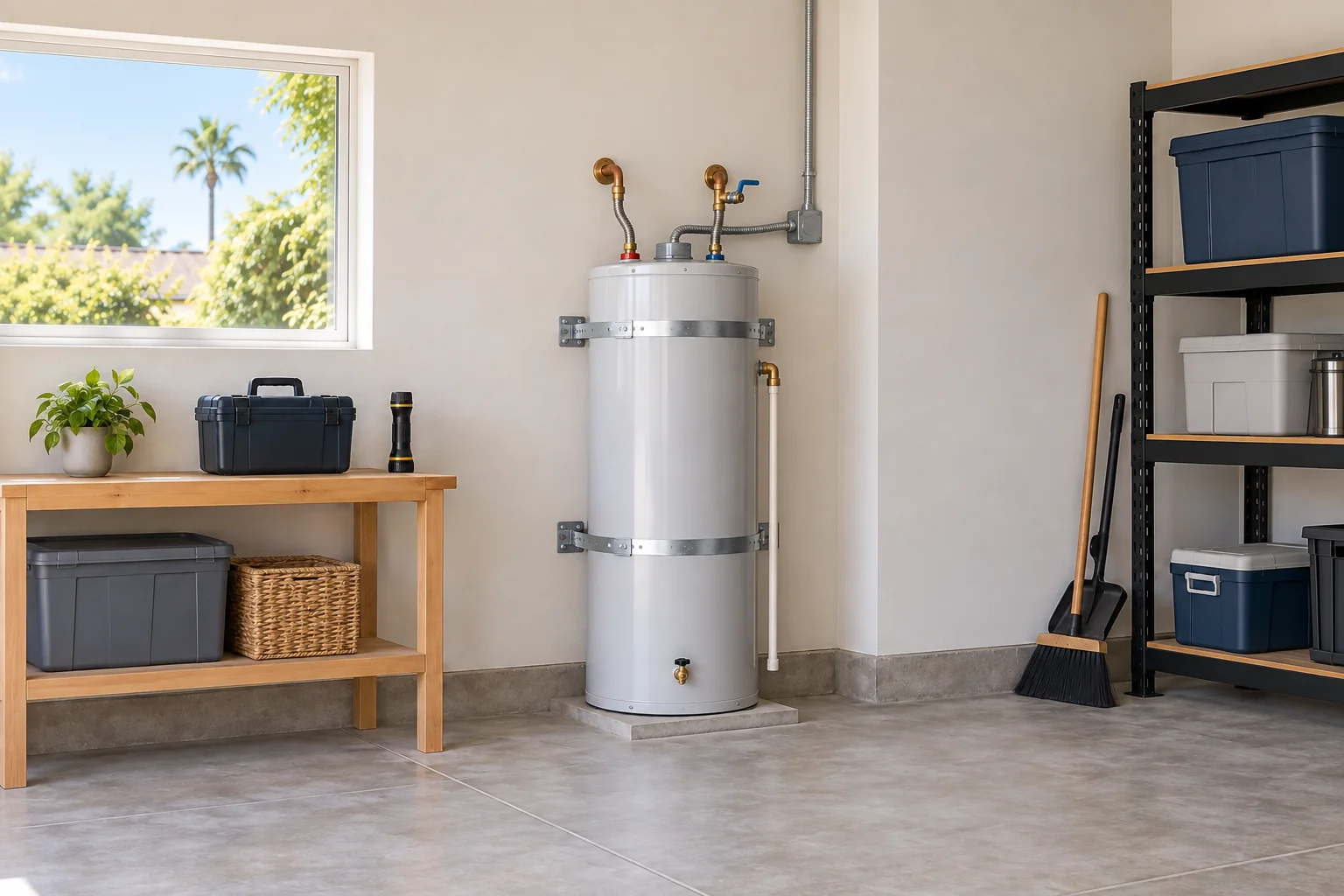
Professional water heater bracing involves securing the unit to wall studs using heavy-duty metal straps or bracing cables at two points: one-third of the way up the tank and two-thirds of the way up. This prevents the heater from tipping during ground shaking. The cost of professional installation (typically $150-$300) is minimal compared to the thousands in water damage restoration costs from a collapsed heater.
Additionally, flexible connectors (as opposed to rigid copper or steel pipes) should connect your water heater to the main line and gas supply, allowing movement without rupturing during seismic activity.
Insurance Gaps: Earthquake Damage vs. Water Damage
Here's where many SoCal homeowners face a rude awakening: standard homeowners insurance does not cover earthquake damage. Most policies explicitly exclude earthquake-related losses, meaning if an earthquake breaks your water line, standard insurance won't cover the water damage restoration.
However, some insurance companies offer earthquake insurance as a separate policy or rider. The critical distinction is this: if your water damage is directly caused by an earthquake (water line breaks due to ground movement), it may not be covered. But if the water damage results from fire department response or secondary effects, coverage becomes murky.
This is why IICRC-certified water damage restoration companies are so important—they work with insurance companies to document causation and file claims properly. Proper documentation can sometimes recover coverage that would otherwise be denied.
IICRC Water Damage Restoration After Seismic Events
Save The Day Restoration & Reconstruction is IICRC-certified, meaning our technicians follow the Institute of Inspection, Cleaning and Restoration Certification's rigorous standards for water damage restoration. After an earthquake, this expertise becomes invaluable.
Our process includes: rapid water extraction to remove standing water from your home and crawl spaces; comprehensive moisture mapping to identify hidden water infiltration in walls and beneath floors; targeted drying to prevent mold colonization; structural drying of foundations and framing; and complete documentation for insurance claims.
IICRC-certified professionals also understand the unique challenges of post-earthquake water damage. We know how to properly dry saturated soil around foundations, manage the overlap between water damage and seismic damage, and restore homes to pre-loss condition efficiently.
The speed of response matters enormously. Every hour that water remains in your home increases the risk of mold growth, structural damage, and secondary contamination. IICRC protocols ensure nothing is missed.
Frequently Asked Questions
Do I need earthquake insurance to protect my home from earthquake-caused water damage?
Standard homeowners insurance does not cover earthquake damage, but earthquake insurance is available as a separate policy. However, earthquake insurance also typically includes high deductibles (often 15-25% of your home's value). Water damage from other causes (like a burst pipe due to earthquake-related pressure changes) may be covered under standard insurance if properly documented. Consult with your insurance agent about coverage gaps, and always document damage thoroughly with professional loss assessors.
How often should I have my water heater inspected for earthquake safety?
Have your water heater bracing inspected annually, and have a professional plumber inspect your water and gas connections every 2-3 years. Corrosion and vibration from normal home settling can weaken connections over time. If your water heater is over 10 years old, you should also consider replacement, as older tanks are more prone to rupturing during seismic events.
What's the difference between IICRC and non-certified restoration companies?
IICRC certification means technicians have passed rigorous testing and follow industry-standard protocols for water damage restoration. Non-certified companies may lack proper training in moisture detection, structural drying, or mold prevention. After an earthquake, when hidden damage is likely, IICRC standards ensure comprehensive restoration that protects your home's long-term integrity and improves insurance claim outcomes.
If my home suffered water damage from an earthquake, will my insurance cover it?
It depends on your policy and the specific cause. If you have earthquake insurance, coverage may apply to directly earthquake-caused damage (subject to your deductible). Water damage from fire department response may be covered under standard policies. The key is professional documentation by IICRC-certified specialists who can trace causation and file claims appropriately.
How quickly can water damage become mold damage after an earthquake?
Mold can begin colonizing within 24-48 hours of water exposure, and visible growth may appear within 5-7 days in warm SoCal conditions. After an earthquake, immediate extraction and drying are critical. IICRC protocols include rapid response (within hours, not days) to prevent mold before it starts. This is why professional restoration within the first 24 hours is essential for earthquake-related water damage.
Don't Wait for the Next Earthquake—Protect Your Home Today
Southern California's seismic activity isn't a matter of if but when. Secure your water heater, know where your main water shut-off is located, and understand your insurance coverage. If an earthquake does strike and you discover water damage, call the professionals immediately. Save The Day Restoration & Reconstruction serves Signal Hill, Long Beach, and throughout LA County and Orange County with IICRC-certified water damage restoration. We're available 24/7 for emergency response. Call us at (562) 246-9908 or visit our website to schedule a pre-earthquake plumbing inspection. License #1049188. Protecting your home from earthquake water damage starts today.
How we prepare and update our guides
Related serviceWater Damage RestorationEmergency water extraction & dryingAbout Save The Day Restoration
Save The Day Restoration is a locally owned, IICRC-certified restoration and reconstruction company serving all of Los Angeles and Orange County. The team coordinates water, fire, and mold restoration and reconstruction, including specialist work when needed. Licensed (CSLB #1049188), bonded, and insured, with 24/7 emergency response.
Call (562) 246-9908