
In this guide
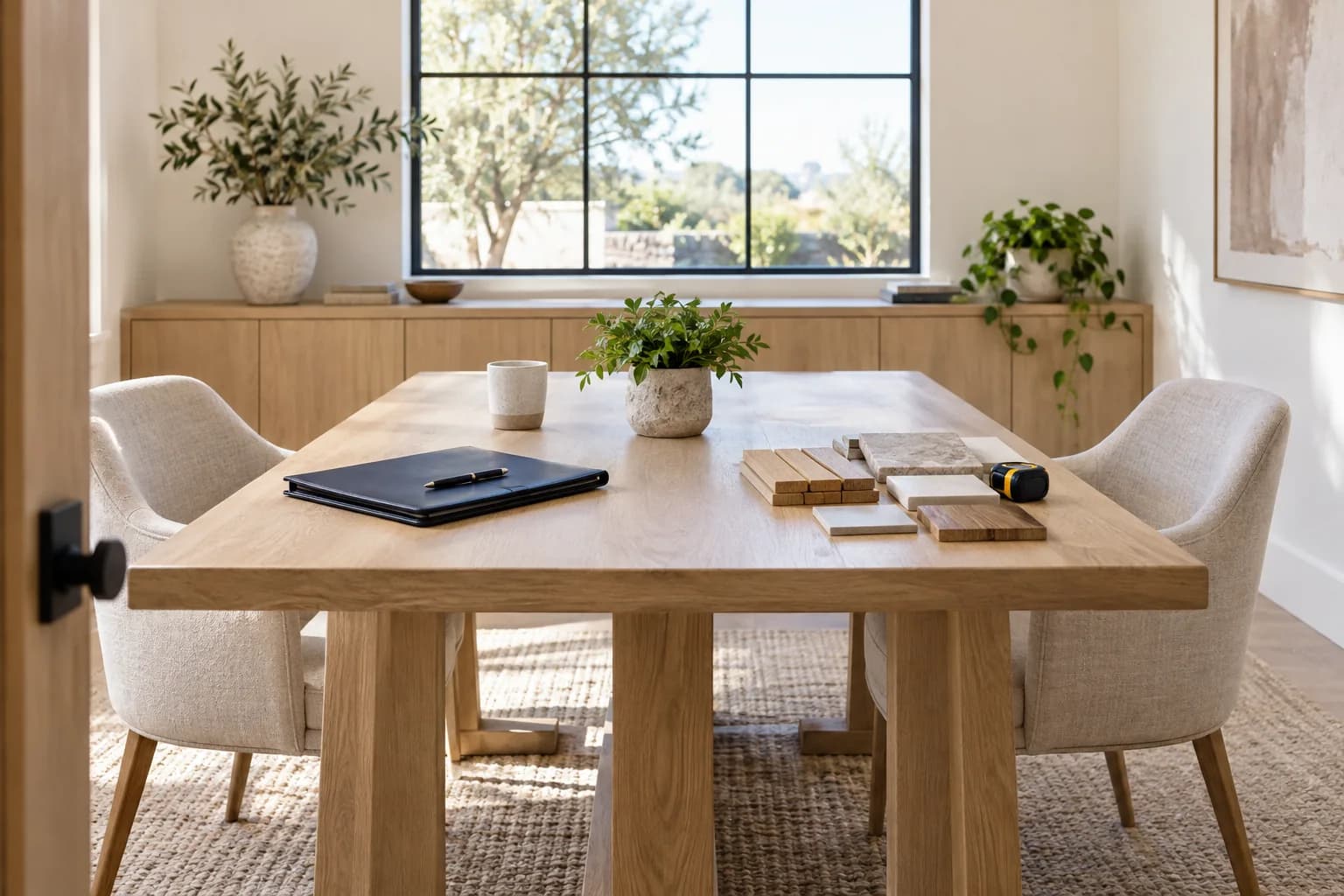
Rebuilding materials should suit the space, moisture exposure, maintenance needs, and approved budget. Compare replacement options with the contractor before ordering and document any scope changes.
Keep it handy
A free printable for this guide
Save a copy for your fridge or binder. No email needed.
Rebuild planning & decision sheet
Track scope, permits, materials, change decisions and the next milestone.
Read the checklist online
Bring this to project meetings and keep it alongside your signed contract and approved plans.
Confirm permit and inspection needs with the local building department and licensed contractor. This sheet is not a permit, contract or occupancy clearance.
Before the work moves ahead
- Confirm the written scope, exclusions, estimate and who manages each stage.
- Ask which permits, inspections and code-related work apply to your property.
- List material choices, order dates and who approves substitutions.
- Keep written change approvals and the latest agreed schedule together.
Space to fill in
- Project / meeting date
- Contractor / main contact
- Permit / inspection questions
Decisions and milestones
Columns: Decision / task; Owner; Needed by; Agreed outcome / reference. 4 blank rows.
Reference guidance
Quick Answer: When rebuilding after property damage, insurance covers replacement with "like kind and quality" materials—matching the quality level of what was damaged. You can upgrade beyond insurance coverage by paying the difference. Key material decisions include flooring (water-resistant LVP and tile outperform carpet and hardwood in water-prone areas), drywall (moisture-resistant greenboard or purple board for bathrooms and kitchens), insulation (closed-cell spray foam resists moisture better than fiberglass), and cabinetry (plywood construction outperforms particleboard for water resistance). Choose materials that match your home's style while improving resilience against the type of damage you experienced. Call Save The Day Restoration at (562) 246-9908 for reconstruction guidance across LA and Orange County.
How Does "Like Kind and Quality" Work for Insurance?
Insurance covers replacing damaged materials with materials of comparable quality and function. If you had mid-grade laminate countertops, insurance covers mid-grade laminate replacement. If you had custom hardwood, insurance covers comparable custom hardwood. This doesn't mean identical—exact matches may not be available, especially for discontinued products. It means equivalent quality, function, and value.
You always have the option to upgrade beyond what insurance covers. Insurance pays its portion (the cost of like-kind replacement), and you pay the difference. For example, if insurance covers $8/sq ft for carpet replacement and you choose $14/sq ft hardwood, you pay the $6/sq ft difference. Many homeowners use reconstruction as an opportunity to make strategic upgrades that improve their home's resilience, aesthetics, and value.
What Flooring Materials Should You Consider?
Which Flooring Is Most Water-Resistant?
If your damage was water-related (burst pipe, flood, water heater failure), choosing water-resistant flooring for the rebuild is a smart long-term investment.
Luxury vinyl plank (LVP): The most popular replacement flooring in water damage reconstruction. Completely waterproof, durable, available in realistic wood and stone looks, comfortable underfoot, and priced at $4-$12 per square foot installed. LVP can be installed over concrete slabs without moisture barriers (unlike hardwood) and won't warp, cup, or delaminate from moisture exposure.
Porcelain and ceramic tile: Fully waterproof and extremely durable. Ideal for bathrooms, kitchens, entryways, and laundry rooms. Premium tile with radiant floor heating is a popular upgrade during reconstruction. Cost: $8-$25+ per square foot installed.
Engineered hardwood: More moisture-resistant than solid hardwood due to its plywood core construction, but not waterproof. Suitable for living areas away from high-moisture zones. Cost: $8-$18 per square foot installed.
Solid hardwood: Beautiful but the most moisture-vulnerable flooring option. Warps, cups, and can develop mold when exposed to moisture. Best reserved for upper floors and areas far from plumbing and water sources. Cost: $10-$25+ per square foot installed.
Carpet: The least water-resistant option. Absorbs water quickly, requires removal after any significant water event, and provides an environment for mold growth. If you choose carpet for bedrooms and living areas, select synthetic fibers (nylon or polyester) with moisture-resistant backing.
What Drywall Options Improve Moisture Resistance?
Standard white drywall is adequate for most interior applications, but moisture-prone areas benefit from upgraded options. Moisture-resistant drywall (greenboard): Has a water-resistant paper face. Appropriate for bathrooms, kitchens, and laundry rooms where humidity is elevated but direct water contact is not expected. Not suitable for shower enclosures. Mold-resistant drywall (purple board): Features a fiberglass face instead of paper, eliminating the organic food source that mold requires. Ideal for bathrooms, kitchens, basements, and any area with elevated moisture risk. Costs 20-30% more than standard drywall but significantly reduces mold risk. Cement board: For shower enclosures, tub surrounds, and other areas of direct water contact. Completely inorganic—will not support mold growth.
What Insulation Should You Choose During Reconstruction?
When walls are opened during restoration, insulation must be replaced to meet Title 24 requirements. Fiberglass batts: The most common and affordable option. Effective insulator but absorbs water if exposed to moisture, losing thermal performance and potentially supporting mold growth. Cost: $0.50-$1.50 per square foot. Closed-cell spray foam: Superior moisture resistance—acts as both insulation and vapor barrier. Does not absorb water, does not support mold growth, and provides higher R-value per inch than fiberglass. Ideal for areas that experienced water damage. Cost: $1.50-$3.50 per square foot. Open-cell spray foam: Good insulator but absorbs water (unlike closed-cell). Not recommended for moisture-prone areas. Cost: $0.75-$1.50 per square foot.
What Cabinetry Materials Resist Water Damage?
Plywood construction: Cabinets built with plywood boxes resist water exposure significantly better than particleboard or MDF. Plywood may warp slightly when wet but maintains structural integrity and can often be dried and restored. Particleboard and MDF: The most common cabinet box material in builder-grade and mid-range cabinetry. Swells, delaminates, and crumbles when exposed to water. Cannot be restored after significant water contact—must be replaced. Thermofoil doors: Common on budget cabinets. The vinyl coating can peel and delaminate when exposed to heat or moisture. Solid wood: The most durable and water-resistant cabinet option. Can typically be dried and restored after water exposure.
What About Fire-Resistant Materials?
If your damage was fire-related, consider fire-resistant upgrades. Class A fire-rated roofing materials (concrete tile, metal, some composite materials). Fire-resistant siding (fiber cement, stucco, brick, stone). Tempered or fire-rated glass for windows in fire-prone areas. Fire-resistant decking materials (composite, aluminum). Fire-rated wall assemblies for attached garages and between units in multi-family buildings. These upgrades may be required by code in VHFHSZ (Very High Fire Hazard Severity Zones) throughout LA and Orange County.
FAQ: Choosing Reconstruction Materials
Q: Can I choose different materials than what was originally in my home?
A: Yes. Insurance covers the cost of replacing with like-kind-and-quality materials. You can choose different materials and pay any difference in cost. For example, replacing damaged carpet with LVP—if LVP costs more, you pay the difference.
Q: Does insurance cover upgraded materials?
A: Insurance covers up to the cost of like-kind replacement. If you upgrade, you pay the additional cost. Your contractor provides a breakdown showing the insurance-covered amount and the homeowner upgrade cost for each material selection.
Q: How do I match new materials to existing undamaged areas?
A: Exact matches for flooring, paint, and trim can be difficult, especially with discontinued products. Your contractor sources the closest available matches. When exact matching isn't possible, the scope may include replacing additional undamaged material to create a uniform appearance—this "matching" cost is covered by insurance.
Q: What materials are best for homes near the coast?
A: Coastal LA and Orange County homes (Long Beach, Huntington Beach, Newport Beach, Seal Beach) face elevated humidity. Choose moisture-resistant materials: LVP or tile flooring, mold-resistant drywall, closed-cell spray foam insulation, stainless steel or composite hardware, and marine-grade finishes for exposed metal components.
Q: Should I choose the cheapest materials to save money?
A: Since insurance covers like-kind replacement, choosing cheaper materials than what was originally installed doesn't save you money—it reduces the quality of your home without reducing your deductible. Choose materials at least equivalent to your originals, and consider strategic upgrades for areas vulnerable to future damage.
Q: Does Save The Day help with material selection?
A: Yes. We guide homeowners through material selection, explaining options, costs, insurance coverage, and performance characteristics. We help you make informed choices that balance budget, aesthetics, durability, and resilience. Call (562) 246-9908.
Build Back Better
Reconstruction is your opportunity to make your home more resilient, more efficient, and more beautiful than before the damage. Smart material choices protect against future damage while improving your daily quality of life.
Call Save The Day Restoration at (562) 246-9908 for expert reconstruction guidance throughout Los Angeles and Orange County. Licensed general contractor #1049188, IICRC-certified technicians, direct insurance billing.
How we prepare and update our guides
Related serviceReconstruction & General ContractingFull rebuilds & renovationsAbout Save The Day Restoration
Save The Day Restoration is a locally owned, IICRC-certified restoration and reconstruction company serving all of Los Angeles and Orange County. The team coordinates water, fire, and mold restoration and reconstruction, including specialist work when needed. Licensed (CSLB #1049188), bonded, and insured, with 24/7 emergency response.
Call (562) 246-9908