In this guide
Mold remediation should address the moisture source, affected materials, work-area precautions, cleaning, and completion checks. A clear scope also explains disposal and the repairs needed after removal.
Keep it handy
A free printable for this guide
Save a copy for your fridge or binder. No email needed.
Moisture & leak observation log
Record stains, odors, humidity readings and changes to share with an inspector.
Read the checklist online
Record what you notice without opening walls or disturbing suspect material. Make a fresh copy for each room.
This log does not diagnose mold or prove a room is dry. If you suspect mold in HVAC equipment, do not run it; seek professional advice.
Look, record, follow up
- Note the room, exact location and when you first noticed the change.
- Record any recent leak, rain event or condensation. Add a photo reference if safe.
- If using a humidity meter, record its reading and location. Arrange help for persistent or recurring moisture.
Space to fill in
- Room / exact location
- First noticed / recent leak or rain
Observation history
Columns: Date / time; What changed / reading; Photo ref.; Action / follow-up. 5 blank rows.
Reference guidance
Make it your own
Stay a step ahead
Home maintenance calendar
Choose your home and its features for a seasonal schedule you can print or add to your calendar.
Build your calendarQuick Answer: Professional mold remediation follows a 7-step IICRC S520-compliant process: initial assessment and moisture mapping, containment with plastic barriers and negative air pressure, HEPA air filtration, physical removal of mold-contaminated materials, antimicrobial treatment of structural surfaces, drying and dehumidification to eliminate the moisture source, and post-remediation verification testing confirming spore counts have returned to normal. The entire process takes 3-10 days depending on scope. Never attempt to remove mold larger than 10 square feet yourself. Call Save The Day Restoration at (562) 246-9908 for IICRC-certified mold remediation across LA and Orange County.
Why Can't You Just Clean Mold With Bleach?
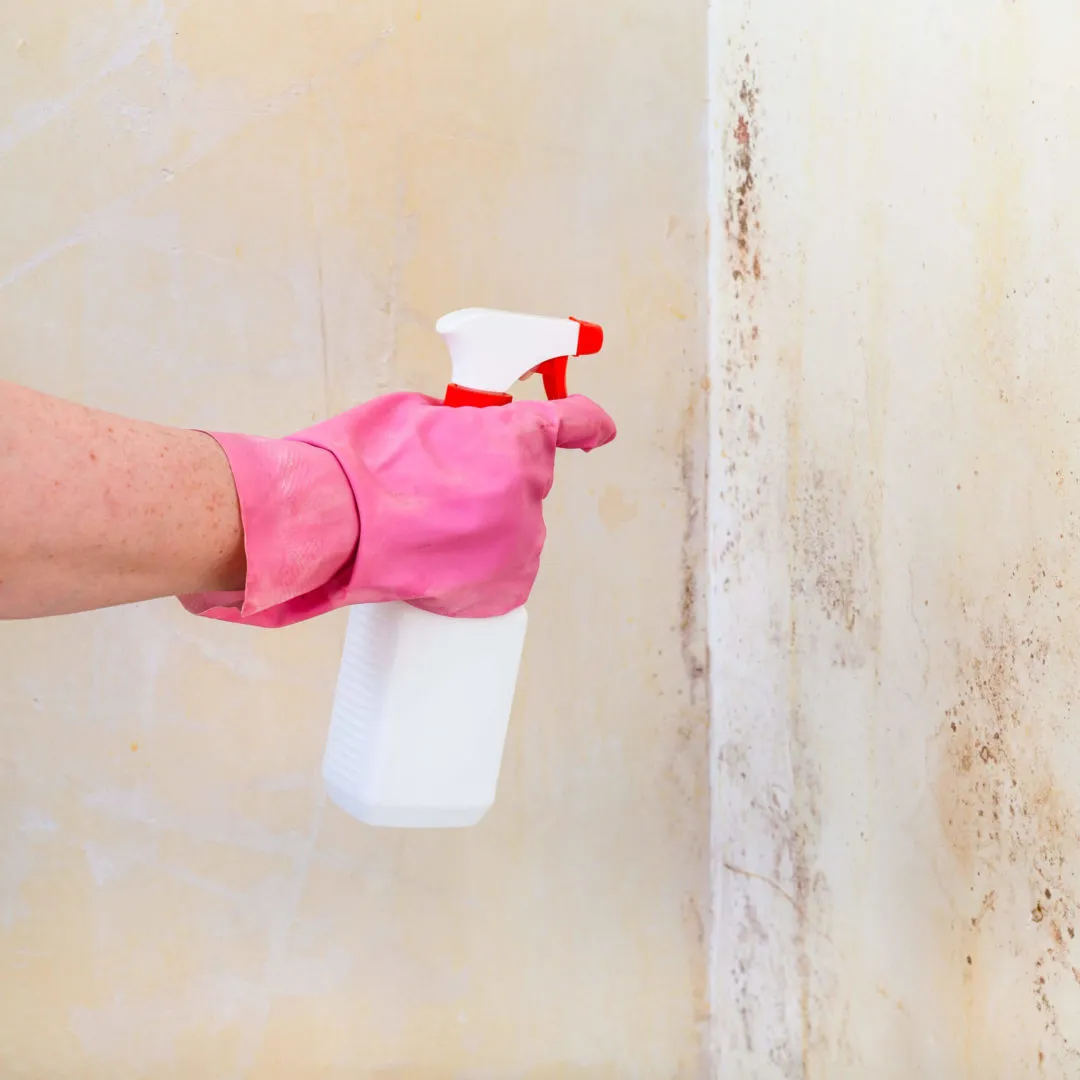
This is the most common and most costly misconception about mold. Bleach and consumer mold products kill mold on non-porous surfaces like tile and glass, but they cannot penetrate porous materials like drywall, wood, carpet, and insulation where mold roots (hyphae) grow deep into the material. Spraying bleach on moldy drywall kills the surface growth while the root system continues thriving inside the material, regrowing within days to weeks.
Worse, disturbing mold without proper containment releases millions of spores into the air, spreading contamination to previously unaffected areas. What started as a mold problem in one bathroom can become a whole-house contamination event after a well-intentioned DIY cleaning attempt.
Professional mold remediation doesn't just kill mold—it physically removes it, eliminates the moisture source that caused it, and uses HEPA filtration to capture airborne spores. This is a fundamentally different approach that produces fundamentally different results.
What Happens During the Initial Mold Assessment?
Before any remediation work begins, IICRC-certified technicians conduct a comprehensive assessment that determines the entire remediation protocol.
How Is Mold Contamination Evaluated?
The assessment includes a visual inspection of all accessible areas—and many mold problems are far more extensive than what's visible. Moisture mapping using professional-grade meters identifies the full extent of moisture intrusion. Thermal imaging cameras reveal hidden moisture and potential mold behind walls, above ceilings, and under flooring without demolition. Air sampling may be performed to measure airborne spore concentrations and identify mold species. Surface sampling from visible growth provides laboratory confirmation of species and concentration.
This assessment produces a remediation protocol—a detailed, written plan specifying exactly what work will be performed, which materials will be removed, what containment and safety measures will be used, and what verification testing will confirm successful remediation.
Why Is Identifying the Moisture Source Critical?
The moisture source must be addressed as part of the remediation plan. Depending on the property, that may mean repairing leaks, improving drainage or ventilation, and verifying drying before finishes are replaced. Leaving the moisture problem unresolved can allow mold to return. See EPA's cleanup guidance.
Common moisture sources in LA and Orange County homes include plumbing leaks (supply lines, drain lines, slab leaks), HVAC condensation problems (clogged condensate drains, poor insulation on supply ducts), roof leaks (damaged flashing, degraded underlayment, failed seals), bathroom humidity from inadequate ventilation, kitchen humidity from cooking without exhaust fans, and exterior water intrusion from poor grading or failed waterproofing.
How Does Containment Prevent Mold From Spreading?
Containment is the critical step that separates professional remediation from amateur cleanup. Before any mold is disturbed, the contaminated area is completely isolated from the rest of your home.
Physical containment: Heavy-duty polyethylene sheeting (6-mil minimum) is sealed around the entire work area using spray adhesive and tape. Doorways, HVAC vents, and any other openings between the contaminated area and clean areas are sealed completely. Furniture and belongings in the work area are either removed to clean areas or sealed in protective plastic.
Negative air pressure: HEPA-filtered negative air machines create lower air pressure inside the containment zone than outside it. This means any air movement flows into the containment zone, not out of it—preventing spores from escaping into clean areas. The contaminated air passes through HEPA filters that capture 99.97% of particles 0.3 microns or larger (mold spores are typically 1-30 microns), then exhausts filtered air outside through a sealed duct.
Worker protection: Technicians entering the containment zone wear full PPE: N95 or P100 respirators, protective suits (Tyvek), goggles, and gloves. A decontamination area is established at the containment entrance for donning and doffing PPE to prevent cross-contamination.
What Materials Are Removed During Mold Remediation?
Mold-contaminated porous materials that cannot be effectively cleaned must be physically removed and disposed of. This typically includes drywall with mold growth (cut to at least 2 feet beyond visible contamination), carpet and carpet padding in the affected area, insulation (fiberglass, cellulose, or spray foam) with mold contamination, ceiling tiles, particleboard, MDF, and other engineered wood products with mold penetration, and paper-backed materials including wallpaper and vapor barriers.
Semi-porous materials like wood framing, subfloor plywood, and concrete may be salvageable if mold growth is limited to the surface. These are treated with aggressive mechanical cleaning (wire brushing, sanding) followed by antimicrobial treatment and encapsulation.
Removed materials are sealed in heavy-duty plastic bags before leaving the containment zone to prevent spore release during transport. Materials are disposed of according to local regulations—in LA and Orange County, mold-contaminated materials can typically be disposed of as construction debris, though severely contaminated materials may require special handling.
How Are Remaining Surfaces Treated?
After contaminated materials are removed, all remaining structural surfaces within the containment zone are treated with a multi-step process. HEPA vacuuming removes settled spores from all surfaces—walls, framing, subfloor, ceiling joists, and any remaining building materials. Wire brushing or sanding removes residual mold from wood framing and other semi-porous surfaces. EPA-registered antimicrobial agents are applied to all treated surfaces to kill remaining mold and prevent regrowth during reconstruction. Encapsulant sealers may be applied to wood framing and subfloor as an additional barrier against future mold growth.
How Is HEPA Air Filtration Used Throughout Remediation?
HEPA (High-Efficiency Particulate Air) filtration is used continuously throughout the remediation process. Negative air machines with HEPA filters run 24/7 during active remediation, capturing 99.97% of airborne particles. Portable HEPA air scrubbers are placed in adjacent clean areas as an additional precaution, filtering air near the containment perimeter. Following material removal and surface treatment, HEPA air scrubbers continue running for 24-48 hours to capture residual airborne spores before post-remediation testing.
Why Is Drying and Dehumidification Part of Mold Remediation?
Since moisture is the root cause of every mold problem, remediation must include complete resolution of the moisture source and thorough drying of all remaining building materials. This phase mirrors the structural drying process used in water damage restoration: commercial dehumidifiers reduce ambient humidity to levels that prevent mold growth (below 60% relative humidity, ideally below 50%), high-velocity air movers promote evaporation from wet building materials, and daily moisture monitoring confirms that all materials reach acceptable moisture levels before reconstruction begins.
In coastal LA and Orange County areas like Long Beach, Huntington Beach, Newport Beach, and Redondo Beach, ambient humidity levels are naturally higher, requiring longer dehumidification periods and potentially ongoing humidity management solutions.
What Is Post-Remediation Verification Testing?
Post-remediation verification (PRV) is the final—and arguably most important—step. PRV testing confirms that the remediation was successful and the indoor environment is safe for reoccupation.
PRV should be performed by an independent third-party inspector (not the remediation company) to ensure objectivity. Testing includes air sampling inside the remediated area and outside (baseline comparison), surface sampling of treated areas, visual inspection confirming all visible mold has been removed, and moisture readings confirming materials are at acceptable levels.
Successful PRV results should show indoor spore counts at or below outdoor baseline levels, no visible mold remaining on any surface, all materials at acceptable moisture levels, and species composition inside comparable to outside (no unusual concentrations of toxigenic species).
Only after PRV confirms successful remediation should reconstruction begin. Rebuilding before verification risks enclosing mold that wasn't fully removed—creating a repeat problem that's even more expensive to address.
FAQ: Mold Remediation Process
Q: How long does professional mold remediation take?
A: Small projects (single bathroom, limited area): 3-5 days. Moderate projects (multiple rooms, extensive drywall removal): 5-7 days. Large projects (whole sections of the home, HVAC system involvement): 7-14 days. These timelines include setup, remediation, drying, and post-remediation verification.
Q: Do I need to leave my home during mold remediation?
A: For small, well-contained projects in isolated areas, you can often remain in the home. For extensive remediation involving multiple rooms, HVAC system treatment, or involvement of toxigenic mold species, temporary relocation is recommended—especially for high-risk individuals (children, elderly, immunocompromised).
Q: Can mold come back after professional remediation?
A: If the moisture source has been properly identified and resolved, and remediation was performed to IICRC S520 standards with successful post-remediation verification, mold regrowth in the same location is unlikely. Mold can only grow where there is moisture—eliminate the moisture and you eliminate the mold risk.
Q: What's the difference between mold removal and mold remediation?
A: "Mold removal" implies removing all mold, which is impossible—mold spores are naturally present everywhere in outdoor air. "Mold remediation" means returning mold levels to normal, natural levels by removing active colonies, treating surfaces, filtering air, and eliminating the moisture source. Reputable companies use the term "remediation" because it accurately describes the achievable goal.
Q: Should I get mold testing before remediation?
A: If mold is clearly visible, testing before remediation isn't strictly necessary—you already know you have a problem. However, pre-remediation testing establishes baseline conditions and species identification that guide the remediation protocol and provide documentation for insurance claims. Post-remediation testing is always recommended.
Q: Does Save The Day Restoration handle both the remediation and reconstruction?
A: Yes. As a licensed California general contractor (#1049188), we handle the complete process from mold assessment through remediation through reconstruction—one company, one project manager, one point of accountability. This eliminates gaps between the remediation company and the rebuilding contractor.
Get Professional Mold Remediation
Mold problems don't resolve themselves—they grow worse every day. Professional remediation following IICRC S520 standards is the only way to ensure mold is properly removed, moisture sources are eliminated, and your home is safe for your family.
Call Save The Day Restoration at (562) 246-9908 for professional mold assessment and IICRC-certified remediation throughout Los Angeles and Orange County. Our AMRT-certified technicians follow documented protocols, use professional containment and HEPA filtration, and coordinate post-remediation verification testing. Direct insurance billing available. Licensed general contractor #1049188.
How we prepare and update our guides
Related serviceMold RemediationTesting, removal & preventionAbout Save The Day Restoration
Save The Day Restoration is a locally owned, IICRC-certified restoration and reconstruction company serving all of Los Angeles and Orange County. The team coordinates water, fire, and mold restoration and reconstruction, including specialist work when needed. Licensed (CSLB #1049188), bonded, and insured, with 24/7 emergency response.
Call (562) 246-9908