In this guide
Prompt source control and appropriate drying reduce the conditions that support mold growth. Assess the water source and affected materials, and use qualified help for contaminated water or extensive damage.
Keep it handy
A free printable for this guide
Save a copy for your fridge or binder. No email needed.
Moisture & leak observation log
Record stains, odors, humidity readings and changes to share with an inspector.
Read the checklist online
Record what you notice without opening walls or disturbing suspect material. Make a fresh copy for each room.
This log does not diagnose mold or prove a room is dry. If you suspect mold in HVAC equipment, do not run it; seek professional advice.
Look, record, follow up
- Note the room, exact location and when you first noticed the change.
- Record any recent leak, rain event or condensation. Add a photo reference if safe.
- If using a humidity meter, record its reading and location. Arrange help for persistent or recurring moisture.
Space to fill in
- Room / exact location
- First noticed / recent leak or rain
Observation history
Columns: Date / time; What changed / reading; Photo ref.; Action / follow-up. 5 blank rows.
Reference guidance
Make it your own
Stay a step ahead
Home maintenance calendar
Choose your home and its features for a seasonal schedule you can print or add to your calendar.
Build your calendarQuick Answer: Prevent mold after water damage by extracting standing water within the first hour, beginning professional structural drying within 24 hours, maintaining indoor humidity below 50% with commercial dehumidifiers, removing saturated porous materials (carpet padding, insulation, drywall below the flood line), running HEPA air scrubbers continuously, and monitoring moisture levels daily until all materials reach target dryness (below 15% for wood, below 1% for drywall). Mold spores begin germinating within 24-48 hours of moisture exposure—speed is the single most important factor in prevention. Call Save The Day Restoration at (562) 246-9908 for 24/7 emergency water extraction across LA and Orange County.
Why Does Mold Prevention Start the Moment Water Damage Occurs?
The clock on mold growth starts ticking the instant building materials get wet. Mold spores are already present in every home—they're naturally occurring in outdoor air and settle on interior surfaces continuously. These dormant spores need only moisture to activate and begin colonizing. In Southern California's warm climate (optimal mold growth temperatures of 70-90°F), germination can begin within 24 hours of moisture exposure.
This narrow window means that the actions you take—or fail to take—in the first 24-48 hours after water damage determine whether you'll be dealing with a water damage restoration project or a significantly more expensive mold remediation project. A water damage restoration that costs $3,000-$8,000 can become a $10,000-$25,000 mold remediation if drying doesn't begin promptly.
What Should You Do in the First Hour After Water Damage?
How Do You Stop the Water Source?
Before anything else, stop the source of water. For burst pipes or supply line failures, shut off the main water valve (every household member should know its location). For appliance overflows, turn off the appliance and its water supply valve. For toilet overflows, turn the supply valve behind the toilet clockwise until it stops. For roof leaks, place containers under active drips and move belongings away from affected areas. For sewer backup, do not attempt to stop the flow—call a plumber immediately and avoid contact with the water (Category 3 contamination).
How Do You Begin Emergency Water Extraction?
Remove as much standing water as possible as quickly as possible. Every gallon of water left on floors and in building materials is moisture that feeds future mold growth. Use a wet/dry shop vacuum to extract standing water from hard surfaces. Mop and blot excess water from floors. Remove area rugs and hang them to dry outdoors if possible. Lift furniture off wet carpeting using aluminum foil or plastic blocks under legs. Open closet doors and cabinet doors to improve air circulation.
These emergency steps help, but they are not substitutes for professional extraction. Consumer equipment removes 40-60% of water, while professional truck-mounted extractors remove 95%+. The remaining moisture in carpet backing, padding, subfloor, and wall cavities requires commercial equipment to address.
Why Is Professional Drying Essential for Mold Prevention?
Professional structural drying is the most important mold prevention step after water damage. It goes far beyond what fans and open windows can accomplish.
How Does Professional Drying Equipment Work?
Commercial dehumidifiers (LGR—Low Grain Refrigerant): These industrial units remove 15-22 gallons of moisture per day from the air—compared to 2-4 gallons for a residential dehumidifier. They maintain indoor humidity below 50%, creating conditions where mold cannot grow while actively pulling moisture from building materials.
High-velocity air movers: Strategic placement of air movers creates airflow patterns that accelerate evaporation from wet surfaces. Professionals calculate placement using the IICRC's drying principles—typically one air mover per 10-16 linear feet of wall, positioned to create laminar airflow across wet surfaces.
Specialty drying equipment: Injectidry systems force dry air directly into wall cavities, under hardwood floors, and into other enclosed spaces that air movers can't reach. These systems are essential for drying structural components without demolition when possible.
Why Is Daily Moisture Monitoring Critical?
Professional restoration companies monitor moisture levels daily using calibrated moisture meters, thermal imaging, and hygrometers. This monitoring confirms that drying is progressing on schedule, identifies areas where moisture is trapped and additional intervention is needed, documents that all materials have reached target moisture levels before equipment is removed, and provides evidence for insurance documentation.
Without daily monitoring, there's no way to confirm that materials deep inside walls, under flooring, or within ceiling assemblies are actually drying. Surface materials can feel dry while internal moisture remains trapped—the exact condition that leads to hidden mold growth weeks later.
Which Materials Must Be Removed to Prevent Mold?
Not all wet materials can be saved. Porous materials that absorb water internally and cannot be effectively dried should be removed within 24-48 hours to prevent mold colonization.
Always remove: Carpet padding (it absorbs water like a sponge and cannot be adequately dried or cleaned), wet insulation (fiberglass and cellulose insulation lose their thermal properties when wet and trap moisture against building materials), drywall below the flood line (water wicks upward through drywall—cut and remove at least 12-24 inches above the visible water line), particleboard and MDF (these materials disintegrate and harbor mold when wet), wet cardboard, books, and paper products.
May be salvageable with professional drying: Carpet (if dried within 24-48 hours and water is Category 1 clean water), hardwood flooring (with proper drying techniques and monitoring), drywall above the flood line (if moisture hasn't wicked to that level), structural wood framing (with professional drying and antimicrobial treatment), and concrete and masonry.
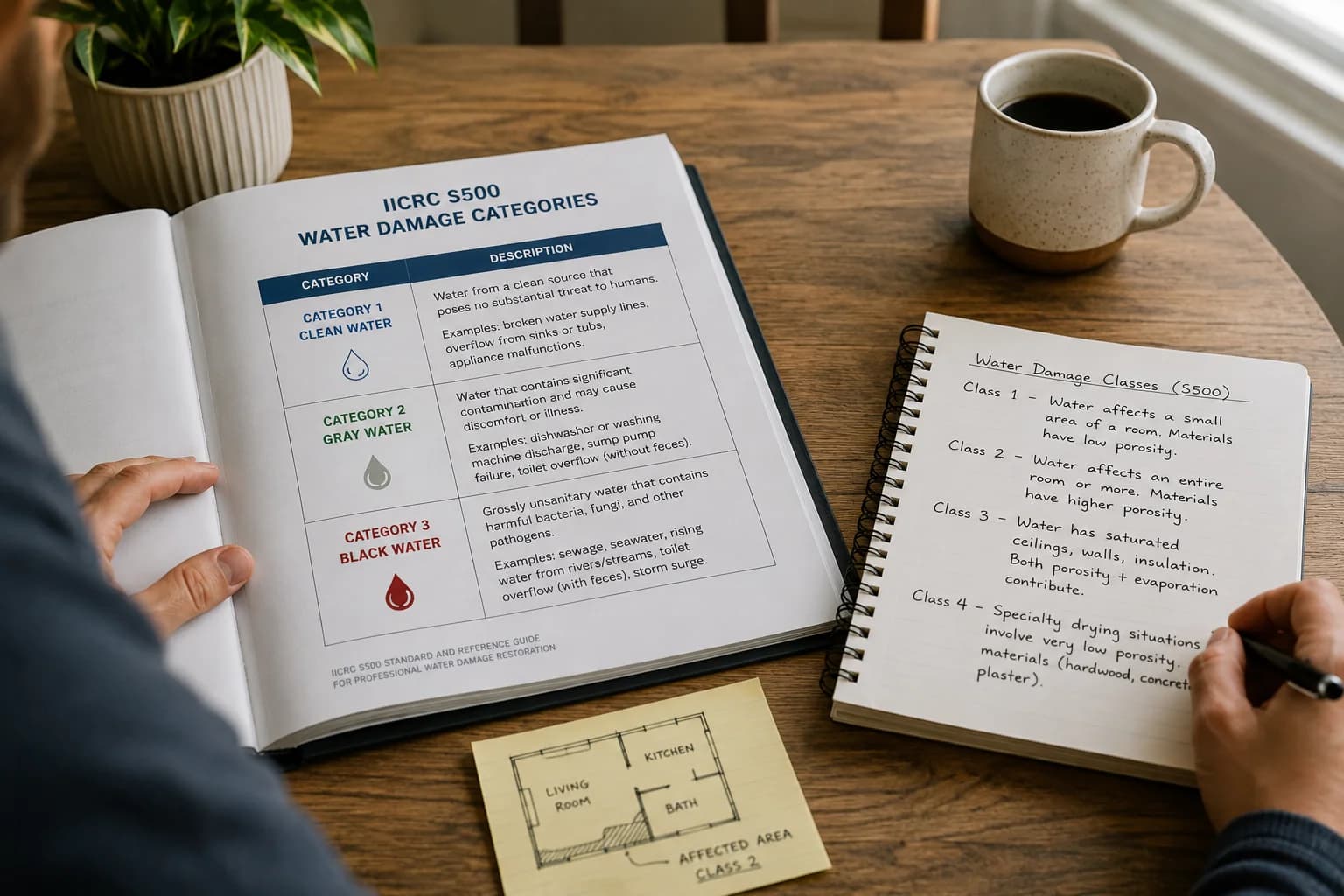
Decisions about material removal should be made by IICRC-certified technicians who can assess moisture content, contamination level, and drying feasibility for each material.
How Does Air Filtration Prevent Mold After Water Damage?
Even before visible mold appears, water damage increases airborne mold spore concentrations. Wet materials release dormant spores as water disturbs surfaces, and humidity conditions activate spores that were previously inactive. HEPA air scrubbers should run continuously during the entire drying process. These units filter 99.97% of particles 0.3 microns and larger, capturing mold spores and preventing them from settling on surfaces and beginning colonization.
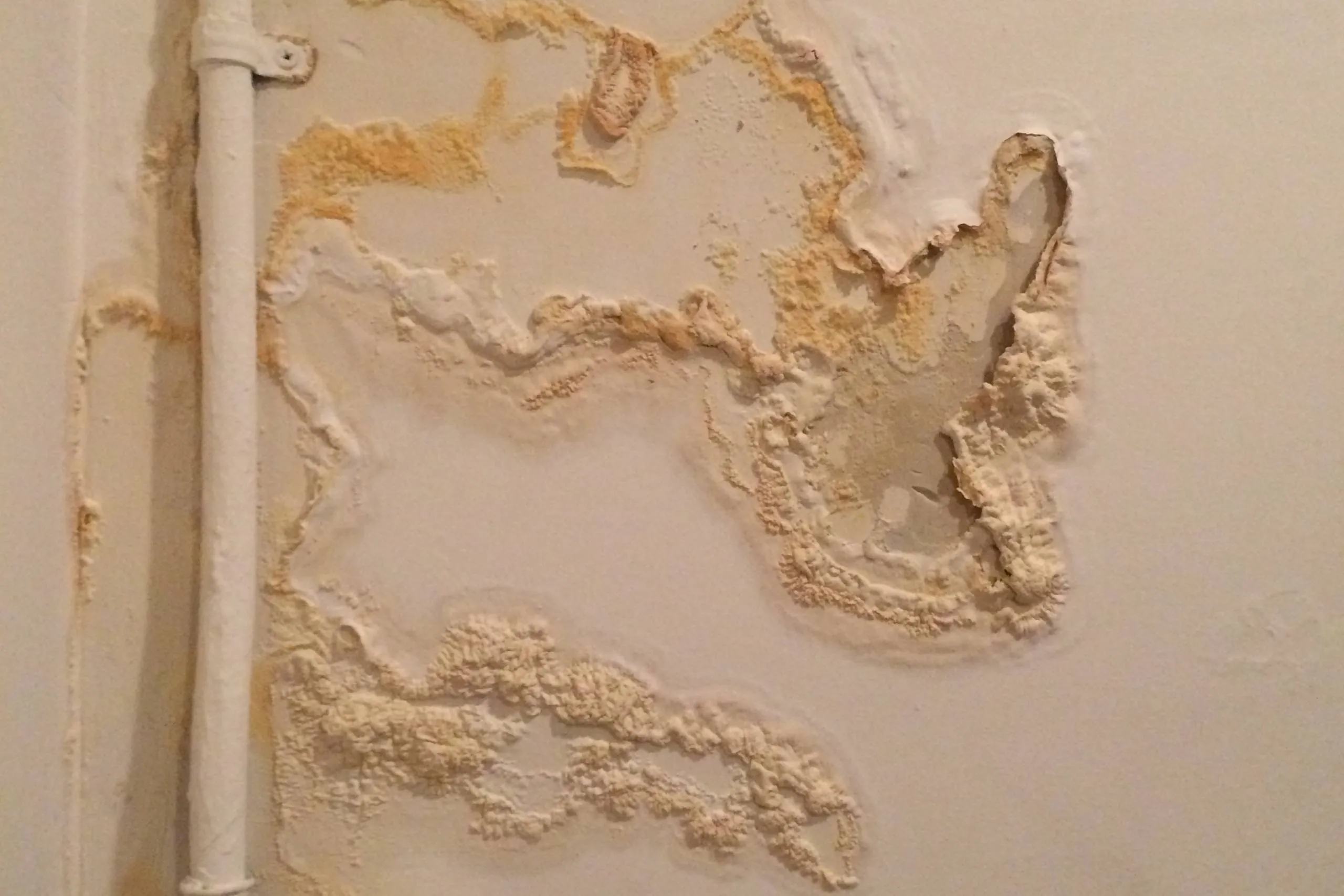
Air scrubbers also help control odors from wet materials and reduce the microbial volatile organic compounds (mVOCs) that indicate microbial activity. If you smell a musty odor during the drying process, it may indicate that mold growth has already begun and additional intervention is needed.
How Do You Prevent Mold in Specific Water Damage Scenarios?
How Do You Prevent Mold After a Burst Pipe?
Shut off the water supply immediately. Extract standing water. Open walls at the leak location to expose the plumbing and allow wall cavity drying. Remove wet insulation and drywall below the waterline. Set up commercial dehumidifiers and air movers. Apply antimicrobial treatment to exposed framing and subfloor. Monitor daily until all materials reach target moisture levels.
How Do You Prevent Mold After a Washing Machine Overflow?
Washing machine overflows are particularly concerning because they often involve heated water and detergent that accelerate microbial growth. Extract water from flooring immediately. Pull the washing machine out and inspect the wall behind it for moisture penetration. Remove wet carpet padding. Dry the subfloor using injectidry systems or by pulling back carpet. Apply antimicrobial treatment to all affected surfaces.
How Do You Prevent Mold After Sewer Backup?
Sewer backup (Category 3 water) presents the highest health risk and most aggressive mold prevention requirements. Do not attempt cleanup without professional PPE. All porous materials contacted by sewage must be removed—no exceptions. Hard surfaces must be cleaned, disinfected, and treated with antimicrobials. The affected area must be dried with commercial equipment. Post-cleanup microbial testing should confirm safe conditions before reoccupation.
What Are Common Mold Prevention Mistakes After Water Damage?
Relying on fans and open windows instead of commercial drying equipment. Leaving wet carpet padding in place because the carpet surface feels dry. Not opening walls to dry wall cavities after plumbing leaks. Removing drying equipment too early because surfaces feel dry (internal moisture may still be elevated). Failing to remove saturated insulation from wall cavities. Not treating surfaces with antimicrobials during the drying process. Skipping post-drying moisture verification. Closing up walls before confirming all materials have reached target moisture levels.
Each of these mistakes leaves hidden moisture that feeds mold growth—growth that may not become apparent for weeks or months, by which time remediation costs have multiplied significantly.
FAQ: Preventing Mold After Water Damage
Q: How quickly does mold grow after water damage?
A: Mold spores can begin germinating within 24 hours. Visible colonies typically appear within 3-7 days. In Southern California's warm climate, growth is on the faster end of this range. This is why professional drying should begin within the first 24 hours.
Q: Can I prevent mold with just fans and a dehumidifier from the store?
A: For very small incidents (a cup of water spilled on hard flooring), yes. For any significant water damage affecting walls, carpet, or multiple rooms, consumer equipment is insufficient. Commercial dehumidifiers remove 5-10x more moisture, and professional air mover placement follows scientific drying principles that consumer setups cannot replicate.
Q: Should I use bleach on wet surfaces to prevent mold?
A: No. Bleach is not an effective mold preventive for porous building materials. Professional antimicrobial products designed for water damage restoration are applied to wood framing, subfloor, and other structural materials during the drying process. These products are EPA-registered and specifically formulated to inhibit mold growth on building materials.
Q: How long does professional drying take?
A: Typically 3-5 days for moderate water damage, depending on the affected materials, the extent of saturation, and ambient conditions. Drying continues until daily moisture readings confirm all materials have reached target levels—not just until surfaces feel dry.
Q: What if I can't get professional help for 24+ hours?
A: Extract as much water as possible with towels, mops, and a shop vacuum. Open windows and run any fans you have to promote air circulation. Remove visible standing water and elevate furniture off wet flooring. These steps won't prevent mold alone, but they slow the process and reduce the eventual scope of professional work needed.
Q: Does Save The Day Restoration provide 24/7 emergency response?
A: Yes. We respond 24/7 with arrival timing confirmed when you call throughout LA and Orange County. Our emergency response vehicles carry truck-mounted extraction units, commercial dehumidifiers, air movers, and antimicrobial treatments—everything needed to begin mold prevention immediately upon arrival.
Don't Wait—Every Hour Counts
The difference between a water damage restoration project and a mold remediation project is often measured in hours, not days. Fast, professional response is the most effective and least expensive mold prevention strategy.
Call Save The Day Restoration at (562) 246-9908 the moment water damage occurs. We respond 24/7, arrive with professional extraction and drying equipment, and begin the mold prevention process immediately. IICRC-certified technicians, daily moisture monitoring, and direct insurance billing. Licensed general contractor #1049188 serving LA and Orange County.
How we prepare and update our guides
Related serviceMold RemediationTesting, removal & preventionAbout Save The Day Restoration
Save The Day Restoration is a locally owned, IICRC-certified restoration and reconstruction company serving all of Los Angeles and Orange County. The team coordinates water, fire, and mold restoration and reconstruction, including specialist work when needed. Licensed (CSLB #1049188), bonded, and insured, with 24/7 emergency response.
Call (562) 246-9908