In this guide
After a storm leak, avoid unstable ceilings, wet electrical areas, and unsafe roof access. Document visible damage from a safe location, then arrange roof repair and assessment of wet interior materials.
Keep it handy
A free printable for this guide
Save a copy for your fridge or binder. No email needed.
Water damage: first steps
A calm, safety-first checklist for a leak, burst pipe, flood or sewage backup.
Read the checklist online
Keep this where everyone can find it. Check off only the steps that are safe for your situation.
Immediate danger? Get out and call 911. Stay out of floodwater, sewage and rooms with electrical or structural hazards.
1 / Keep people safe
- Move people and pets away from the affected area. Follow evacuation instructions.
- Do not touch wet outlets, appliances or electrical panels. Have a qualified professional make the area safe.
2 / Get the right help
- For a plumbing leak, close the known water shutoff only if you can reach it safely from a dry area.
- Call a plumber for the source and a restoration team for the damage. Tell them if sewage or floodwater is involved.
- Wait for professional advice before using fans, equipment or opening walls when contamination is possible.
3 / Start a simple record
- From a safe area, note when the damage was discovered and which rooms are affected.
- Photograph what you can safely see. Contact your insurer and keep receipts and call notes.
Space to fill in
- Water shutoff location
- Plumber / emergency number
- Damage found: date / time
- Restoration visit / next step
Reference guidance
Make it your own
Keep the details together
Damage documentation organizer
Record what happened, follow room-by-room photo prompts and export notes and photos in one organized record.
Start your damage recordQuick Answer: Storm-related roof leaks in LA and Orange County commonly result from failed flashing around vents, chimneys, and skylights, cracked or displaced concrete/clay tiles, degraded underlayment, and wind-lifted roofing materials. Water entering through the roof saturates attic insulation, ceiling drywall, wall cavities, and framing—creating conditions for mold growth within 48 hours. Emergency tarping prevents further damage and is covered by insurance. Document the roof damage and interior water intrusion before repairs. Don't walk on a wet or damaged roof. Call Save The Day Restoration at (562) 246-9908 for emergency roof tarping and water damage restoration across LA and Orange County.
Why Are Roof Leaks So Damaging During Storms?
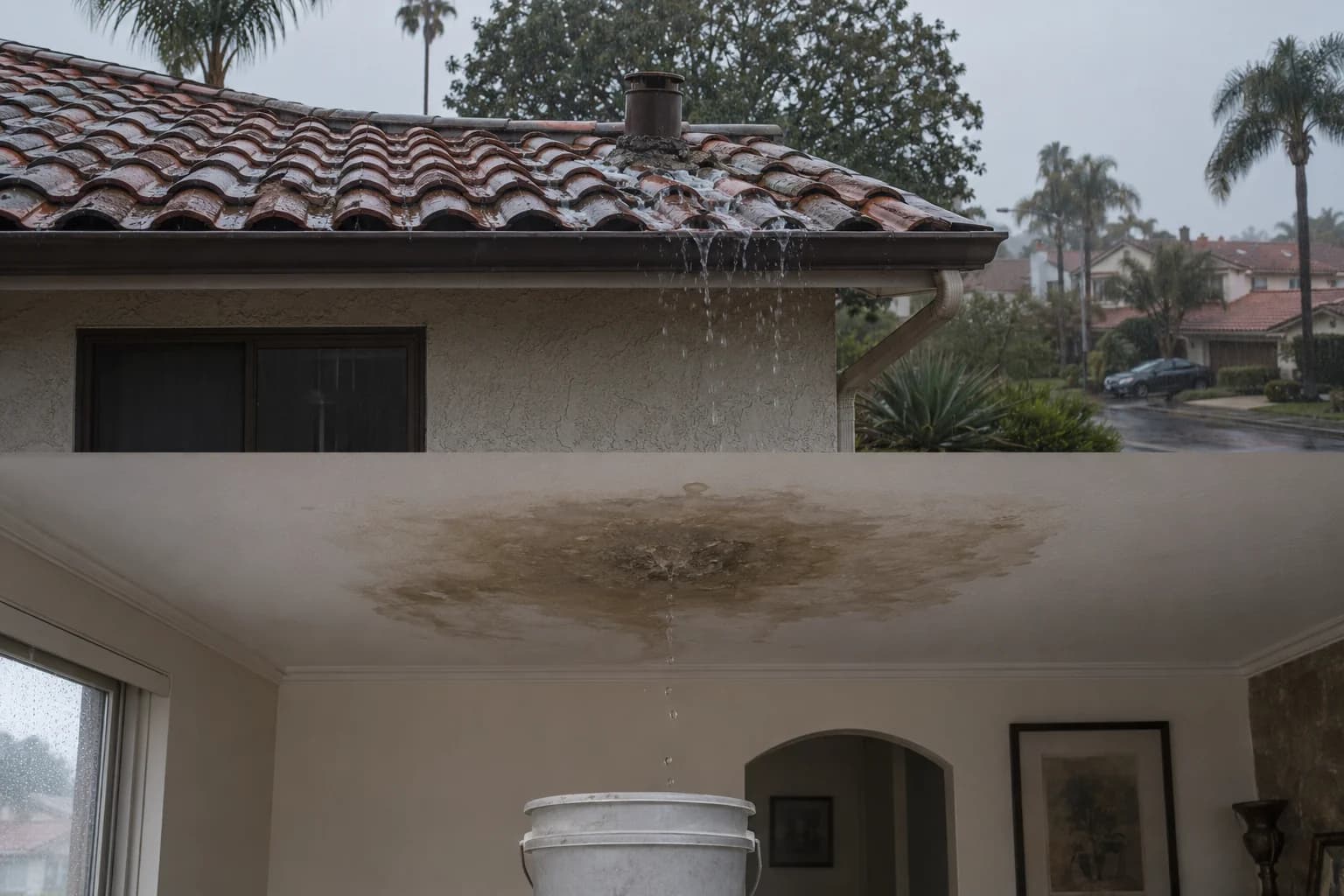
A roof leak during a storm isn't like a dripping faucet—it's a continuous flow of water entering your home's most vulnerable spaces. Water entering through the roof flows into the attic, soaking insulation, saturating rafters and roof sheathing, and pooling on the ceiling drywall below. As drywall absorbs water, it sags and eventually fails—sending water cascading into living spaces where it damages walls, flooring, furniture, and electronics.
The damage pathway is extensive because water follows gravity and the path of least resistance: it flows along rafters, down wall cavities, through electrical and plumbing penetrations, and can appear in rooms far from the original leak location. A roof leak above the master bedroom can produce water stains in the living room below as water travels along ceiling joists and wall framing.
At Save The Day Restoration, roof leak water damage is one of our most common storm-season calls across LA and Orange County. The homeowners who minimize damage act immediately: covering the roof breach, extracting water, and beginning professional drying within 24 hours.
What Causes Roof Leaks During Storms in Southern California?
How Does Flashing Failure Cause Leaks?
Flashing—the metal strips that seal transitions between roofing material and vertical surfaces—is the number one source of roof leaks. Flashing is installed around chimneys, plumbing vents, HVAC penetrations, skylights, satellite dish mounts, and where the roof meets walls. Over time, flashing corrodes, sealant deteriorates, and thermal expansion loosens connections. During heavy rain, water penetrates these failed seals and enters the attic space. In LA and Orange County's dry climate, flashing deterioration often goes unnoticed during dry months, only revealing itself during the first heavy rain of the season.
How Do Tile Roof Problems Cause Leaks?
Concrete and clay tile roofs are ubiquitous throughout LA and Orange County. While durable, tile roofs develop problems that allow water intrusion: cracked tiles from thermal cycling, foot traffic, or fallen debris; displaced or slipped tiles from wind events or ground settling; deteriorated underlayment beneath tiles (the actual waterproofing layer that degrades over 20-30 years even while tiles remain intact); and failed mortar at hip and ridge caps. The most insidious tile roof failure is underlayment degradation. Tiles can appear perfect from the ground while the underlayment beneath has deteriorated to the point where it no longer sheds water. This only becomes apparent during heavy rain.
How Does Wind Damage Cause Roof Leaks?
Santa Ana winds and Pacific storm winds can lift, crack, or remove roofing materials. Composition shingles can be lifted and torn by 60+ mph gusts. Tile can be cracked by flying debris or displaced by sustained wind pressure. Flat roof membranes can be peeled back at edges and seams. Even when wind doesn't visibly damage the roof surface, it can break the seal on flashing, loosen fasteners, and create gaps that allow wind-driven rain to penetrate.
What Should You Do When You Discover a Roof Leak?
How Do You Minimize Interior Damage?
Place containers under active drips to catch water. Move furniture, electronics, and valuables away from the affected area. If the ceiling is sagging or bulging with trapped water, carefully puncture it with a screwdriver at the lowest point to release the water into a container in a controlled manner—uncontrolled ceiling collapse releases all the water at once, causing far more damage. Lay towels or plastic sheeting to protect flooring. Open closet doors and remove items from shelves and floors in affected rooms.
How Do You Emergency-Tarp a Damaged Roof?
Do NOT go on your roof during active rain or high winds—the fall risk is extreme, especially on wet tile. If the storm has passed and conditions are safe, a tarp can prevent further water intrusion until professional repairs are made. Use a tarp at least 6 feet larger than the damaged area on all sides. Extend the tarp over the roof ridge if possible to prevent water from flowing under it. Secure with 2x4 boards and screws (nails pull out). Weight the edges with sandbags on flat roofs.
If you cannot safely tarp the roof yourself, call a restoration company for emergency tarping. This is a covered expense under your insurance policy as part of your duty to mitigate further damage.
What Interior Damage Do Roof Leaks Cause?
Attic damage: Saturated insulation loses its thermal performance and traps moisture against roof sheathing and framing, promoting wood rot and mold growth. Fiberglass insulation that has been thoroughly soaked typically needs replacement. Cellulose insulation (common in older LA and Orange County homes) absorbs water readily, compresses, and becomes a mold-rich environment.
Ceiling damage: Water-saturated ceiling drywall sags, stains, and eventually collapses. Textured ceilings (popcorn, knockdown, orange peel) absorb water quickly and are difficult to match during repairs. Water pooling on the top side of ceiling drywall can spread across a large area before any signs appear below.
Wall damage: Water flowing from the attic into wall cavities saturates insulation, drywall, and wood framing. Because wall cavities are enclosed, this moisture can't evaporate and creates ideal mold conditions. Water traveling inside walls can damage rooms far from the original roof leak.
Electrical damage: Water in contact with electrical wiring, junction boxes, and fixtures creates fire and shock hazards. If water has contacted any electrical components, have an electrician inspect before restoring power to those circuits.
Mold growth: Warm, dark, enclosed spaces like attics and wall cavities are ideal mold environments. Once moisture enters these spaces, mold can begin growing within 24-48 hours. Attic mold from roof leaks is extremely common and can colonize large areas of roof sheathing and framing before being discovered.
Does Insurance Cover Roof Leak Damage?
Insurance coverage for roof leak damage depends on what caused the leak. Covered scenarios include wind damage that creates an opening (covered peril), fallen trees or branches that damage the roof (covered peril), hail damage to roofing materials, and sudden storm damage creating new openings. In these cases, both the roof repair and the resulting interior water damage are covered under your standard homeowner's policy.
Not covered scenarios include gradual roof deterioration from age and wear, deferred maintenance (known issues you didn't repair), underlayment degradation over time, and pre-existing damage that worsens during a storm. Insurance covers sudden events, not predictable consequences of aging materials and deferred maintenance.
The gray area involves situations where an aging roof fails during a storm. If wind or impact created a new opening, the damage is likely covered. If an already-deteriorated roof simply couldn't handle heavy rain, the insurer may argue maintenance failure. Professional documentation of the specific failure mechanism supports your claim.
How Do You Prevent Roof Leak Damage?
Schedule a professional roof inspection annually, ideally before rainy season (September-October in Southern California). Address identified issues promptly—minor repairs cost $200-$1,500, while storm-related water damage from deferred maintenance costs $5,000-$25,000+. Clean gutters and downspouts to prevent water backup at the roof edge. Trim overhanging tree branches that can damage the roof during wind events. Inspect your attic after storms for signs of water intrusion (even small amounts). Know your roof's age and material—most roofing materials have a 20-40 year lifespan, and proactive replacement before failure prevents catastrophic storm damage.
FAQ: Roof Leak Storm Damage
Q: How do I know if my roof leak is an emergency?
A: Any active roof leak during rain is an emergency because water is continuously entering your home and causing escalating damage. Call for emergency tarping immediately. Between storms, ceiling stains and drip marks indicate a leak that will reactivate with the next rain—address before the next storm arrives.
Q: Can I just patch the ceiling stain and repaint?
A: No. A ceiling stain from a roof leak means water entered the attic and wall spaces above. Cosmetic patching hides the stain but doesn't address the saturated insulation, wet framing, and potential mold growth in the attic and wall cavities. The leak source must be repaired and the affected areas must be dried and inspected for mold before cosmetic repairs.
Q: How much does roof leak water damage restoration cost?
A: Minor roof leak damage (small area, caught quickly): $1,500-$5,000. Moderate damage (multiple rooms, attic involvement): $5,000-$15,000. Severe damage (prolonged leak, extensive mold, structural damage): $15,000-$30,000+. Emergency tarping costs $300-$1,500 and is covered by insurance.
Q: Should I repair the roof or the interior damage first?
A: Stop the water source first. Emergency tarping prevents further intrusion while permanent roof repair is scheduled. Interior restoration (extraction, drying, material removal) can begin while the tarp is in place. Permanent roof repair and interior reconstruction can proceed simultaneously or sequentially once the immediate emergency is controlled.
Q: How long does mold take to grow from a roof leak?
A: Mold can begin growing in attic spaces within 24-48 hours of moisture exposure. Attic conditions (warm, dark, organic materials) are ideal for mold. After any roof leak, inspect the attic for signs of mold growth including visible colonies, musty odor, and staining on roof sheathing and framing.
Q: Does Save The Day Restoration handle roof leak damage?
A: Yes. We provide emergency roof tarping, interior water extraction, attic insulation removal, structural drying, mold remediation (if needed), and complete reconstruction including ceiling, wall, and insulation replacement. 24/7 response throughout LA and Orange County. Licensed general contractor #1049188, direct insurance billing available.
Don't Wait for the Next Storm
If your roof leaked during the last storm, it will leak worse during the next one. Address roof leaks immediately to prevent escalating water damage, mold growth, and structural deterioration.
Call Save The Day Restoration at (562) 246-9908 for emergency roof tarping and complete water damage restoration throughout Los Angeles and Orange County. 24/7 response, IICRC-certified technicians, licensed general contractor #1049188, direct insurance billing with all major carriers.
How we prepare and update our guides
Related serviceWater Damage RestorationEmergency water extraction & dryingAbout Save The Day Restoration
Save The Day Restoration is a locally owned, IICRC-certified restoration and reconstruction company serving all of Los Angeles and Orange County. The team coordinates water, fire, and mold restoration and reconstruction, including specialist work when needed. Licensed (CSLB #1049188), bonded, and insured, with 24/7 emergency response.
Call (562) 246-9908