In this guide
Avoid damaged structures, power hazards and roof access. Document conditions only when safe, notify your insurer and arrange qualified help for temporary protection and repairs.
Keep it handy
A free printable for this guide
Save a copy for your fridge or binder. No email needed.
Water damage: first steps
A calm, safety-first checklist for a leak, burst pipe, flood or sewage backup.
Read the checklist online
Keep this where everyone can find it. Check off only the steps that are safe for your situation.
Immediate danger? Get out and call 911. Stay out of floodwater, sewage and rooms with electrical or structural hazards.
1 / Keep people safe
- Move people and pets away from the affected area. Follow evacuation instructions.
- Do not touch wet outlets, appliances or electrical panels. Have a qualified professional make the area safe.
2 / Get the right help
- For a plumbing leak, close the known water shutoff only if you can reach it safely from a dry area.
- Call a plumber for the source and a restoration team for the damage. Tell them if sewage or floodwater is involved.
- Wait for professional advice before using fans, equipment or opening walls when contamination is possible.
3 / Start a simple record
- From a safe area, note when the damage was discovered and which rooms are affected.
- Photograph what you can safely see. Contact your insurer and keep receipts and call notes.
Space to fill in
- Water shutoff location
- Plumber / emergency number
- Damage found: date / time
- Restoration visit / next step
Reference guidance
Make it your own
Keep the details together
Damage documentation organizer
Record what happened, follow room-by-room photo prompts and export notes and photos in one organized record.
Start your damage recordQuick answer: Stay away from damaged structures, downed power lines and water near electrical equipment. Follow emergency instructions. Photograph damage only when safe, contact your insurer promptly and arrange qualified help for temporary protection and repairs. Do not climb onto a damaged roof. Call (562) 246-9908 to discuss restoration availability.
What Types of Storm Damage Affect LA and Orange County Homes?
Southern California may be known for sunshine, but when storms hit our region, the damage can be severe and widespread. LA and Orange County homes face storm risks that are unique to our geography, construction styles, and climate patterns.
Wind damage: Santa Ana wind events regularly produce gusts of 60-100+ mph, tearing off roof tiles, downing trees, breaking windows, and damaging fences and outdoor structures. Pacific storms and atmospheric rivers bring sustained winds of 40-70 mph that stress roofing systems, particularly flat roofs and aging tile installations common throughout our area.
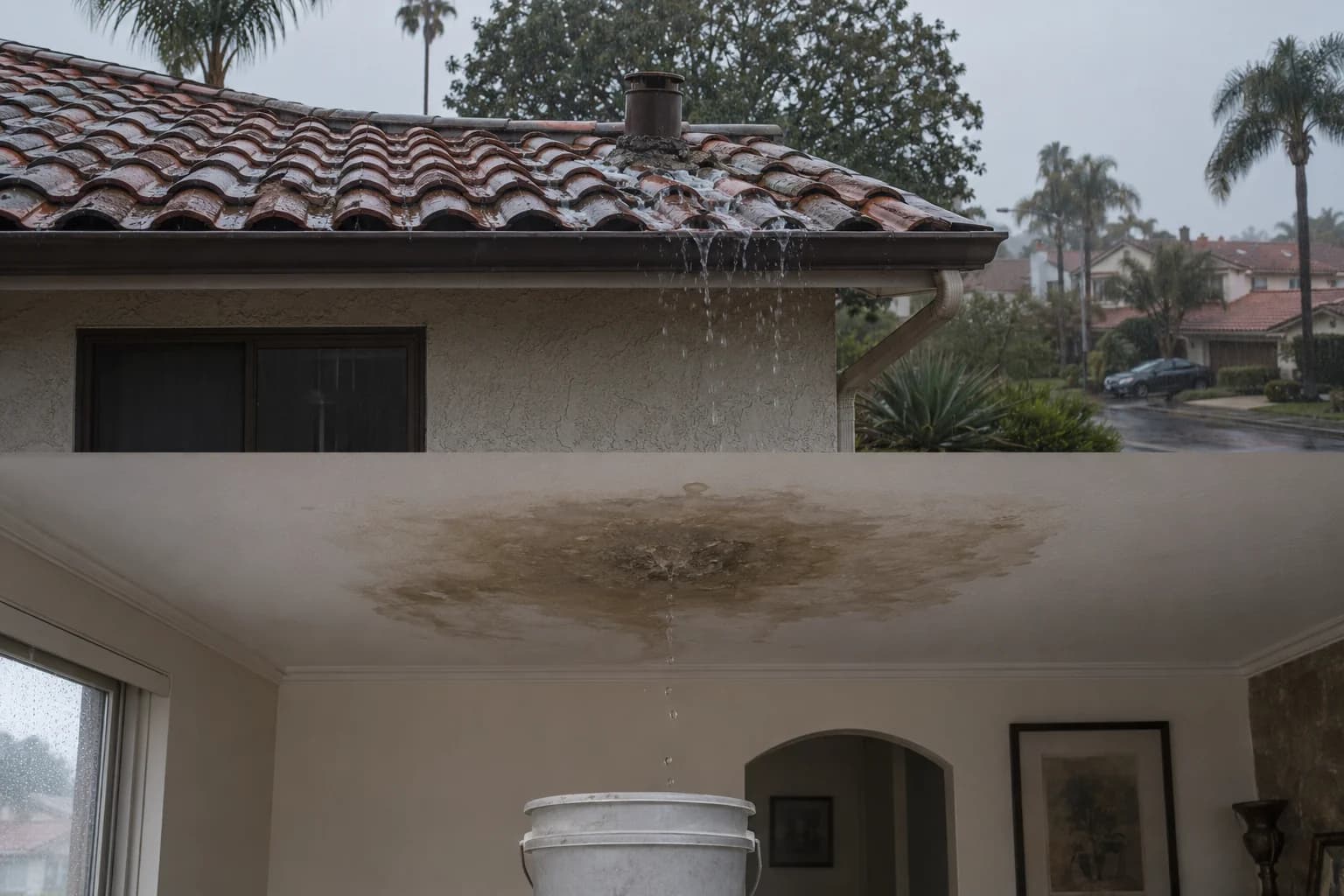
Rain and water intrusion: When heavy rain hits—especially during atmospheric river events that can dump 3-8 inches in 24 hours—water finds every weakness in your home's building envelope. Damaged flashing, aging roof underlayment, cracked stucco, failed window seals, and inadequate drainage systems all become entry points for water that saturates walls, ceilings, and flooring.
Flooding: Flash flooding affects low-lying areas, properties near channels and rivers, and hillside properties where runoff concentrates. Flood zones throughout LA and Orange County include areas along the LA River, San Gabriel River, Santa Ana River, and dozens of smaller channels and washes.
Mudslides and debris flows: Post-wildfire hillside areas are extremely vulnerable to debris flows during rain events. Burned vegetation can no longer absorb or slow rainfall, and loose soil becomes a fast-moving slurry of mud, rocks, and debris. This is one of Southern California's most dangerous storm-related hazards.
Hail damage: While less common than in other regions, hail does occur in Southern California storms and can damage roofing materials, skylights, siding, outdoor equipment, and vehicles.
What Should You Do Immediately After a Storm?
How Do You Assess Safety Before Entering Your Home?
Do not rush back into your home after a storm—assess safety first from the outside. Look for structural damage such as leaning walls, sagging roof sections, or visible foundation shifts. Check for downed power lines near or touching your home (stay at least 35 feet away and call 911). Look for gas leaks (smell of rotten eggs, hissing sounds)—if detected, do not enter. Leave immediately and call your gas company from a safe distance. Check for standing water near electrical panels, outlets, or appliances. Look for fallen trees or branches resting on the structure that could shift.
If you see any of these hazards, do not enter until professionals have cleared the home. Call 911 for immediate dangers and your utility companies for gas or electrical concerns.
How Do You Prevent Further Damage?
Once you've confirmed the home is safe to enter, take immediate steps to prevent additional damage—your insurance policy requires you to mitigate further loss.
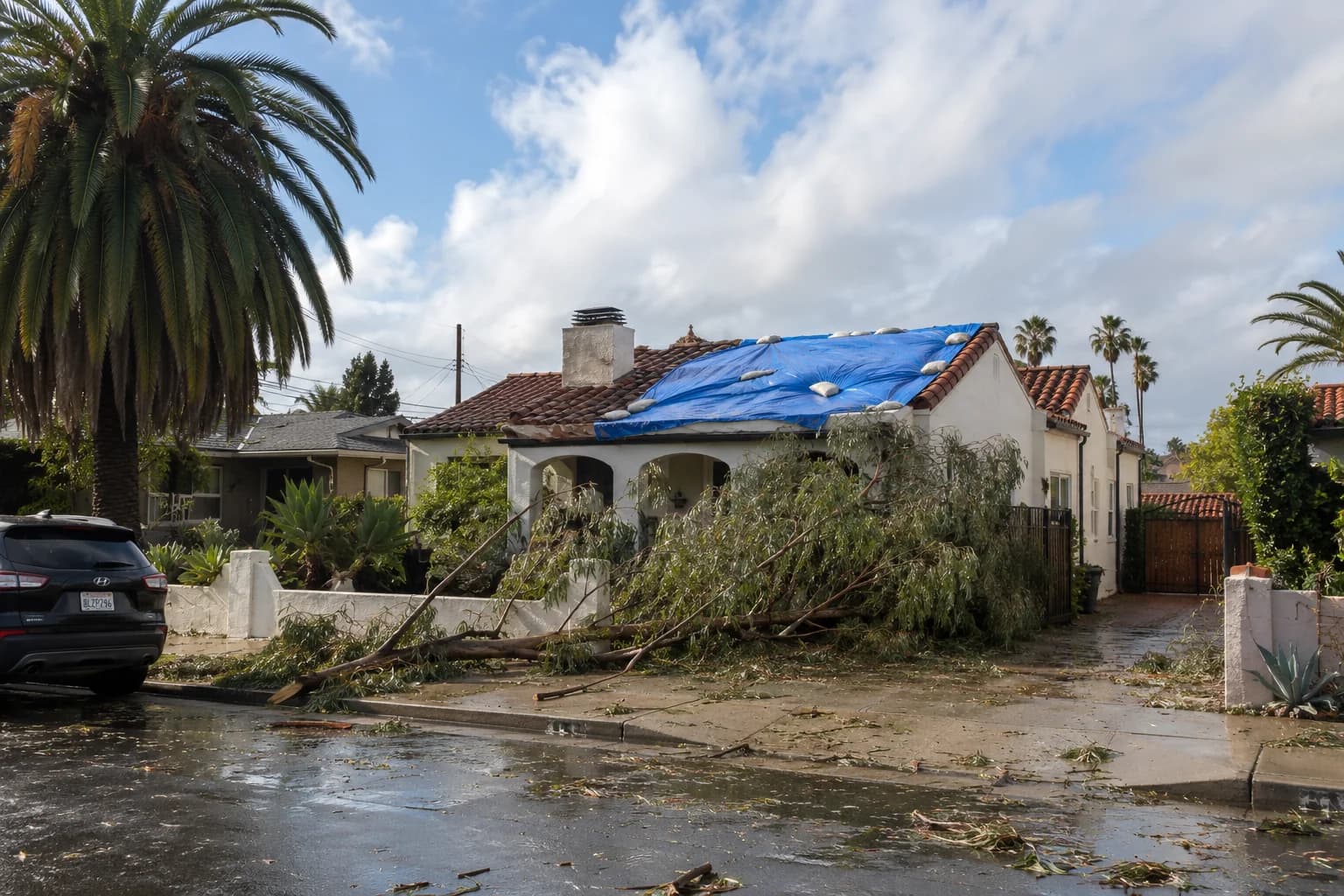
Arrange temporary roof protection: Ask a qualified contractor about tarping or other temporary measures. Do not climb onto a wet or damaged roof, and do not place yourself beneath unstable materials. Confirm access and weather conditions before work is scheduled.
Board up broken windows and doors: Plywood over broken windows prevents additional water intrusion, secures the home against unauthorized entry, and protects against wind-driven rain in subsequent storms.
Remove standing water: Begin extracting standing water as soon as safely possible. Use a wet/dry vacuum, mops, and towels. Move furniture and belongings away from wet areas.
Promote air circulation: Open interior doors, run fans (if power is safely available), and open windows in non-rain-exposed areas to begin reducing humidity.
How Do You Document Storm Damage for Insurance?
Thorough documentation is the foundation of a successful storm damage insurance claim. Begin documenting before any cleanup or repairs.
Take extensive photos and video of all visible damage from multiple angles. Include wide shots showing the overall scope and close-ups showing specific damage details. Photograph the roof from ground level, exterior walls, windows, interior water damage, damaged belongings, and the surrounding property. Record a video walkthrough narrating the damage as you move through each room. Save weather reports and local news coverage documenting the storm event. Keep a written log of the timeline: when the storm hit, when you discovered damage, what emergency actions you took, who you called, and when. Preserve damaged materials—don't dispose of anything until the adjuster has inspected. If disposal is necessary for safety, photograph extensively first.
How Do You File a Storm Damage Insurance Claim?
What Does Your Policy Cover After a Storm?
Storm coverage depends on the cause of damage and the policy. Ask the insurer to explain wind, rain intrusion, flood exclusions, temporary protection and any special limits that apply. Review CDI's property claims guide for questions to ask after a loss.
Standard policies typically do NOT cover flood damage (rising water requires separate NFIP or private flood policy), mudslide and earth movement, gradual water intrusion through existing roof deterioration, and cosmetic damage that doesn't affect function.
When Should You File Your Claim?
Notify your insurer promptly and ask about reporting requirements and safe temporary mitigation. California claims-handling deadlines depend on the event that starts the clock, the policy and applicable exceptions or extensions. Ask your insurer for the requirements that apply to your claim. See CDI's claims-handling guide. Prompt filing demonstrates good faith and establishes your timeline. After major regional storms, adjusters are overwhelmed with claims—filing early gets you in the queue sooner.
How Do You Handle the Adjuster Inspection?
Be present during the adjuster's inspection. Walk them through all damage systematically. Point out damage they might miss—especially water stains on ceilings that indicate roof leaks, moisture behind walls (a moisture meter can detect this), and secondary damage in adjacent rooms. Provide your documentation, including your contractor's or restoration company's assessment. If the adjuster's estimate seems low, you have the right to get independent estimates and negotiate.
When Do You Need Professional Storm Damage Restoration?
Call a professional restoration company when water has entered the home through roof damage, broken windows, or other storm-created openings. Even "minor" water intrusion can saturate insulation, drywall, and framing—creating mold conditions within 48 hours.
Professional storm damage restoration includes emergency board-up and tarping to prevent further intrusion, water extraction from all affected areas, structural drying with commercial dehumidifiers and air movers, moisture monitoring to confirm complete drying, mold prevention through antimicrobial treatment, and content cleaning and restoration for damaged belongings.
How Do You Handle Fallen Trees After a Storm?
Tree damage is one of the most common storm damage types in LA and Orange County, where mature trees are abundant throughout established neighborhoods. If a tree has fallen on your home, do not enter the structure until it's been assessed by a structural engineer or qualified contractor. Call your insurance company—ask whether tree removal and resulting structural damage are covered. Have the tree professionally removed—never attempt to cut or remove a tree resting on a structure yourself. Document the tree's point of impact and all resulting damage.
If a neighbor's tree damages your property, report the facts to your insurer and ask which policy provisions apply. Coverage, tree-removal limits and any responsibility of another property owner depend on the policy and circumstances. Do not assume that payment is guaranteed regardless of the cause.
How Do You Prepare for the Next Storm?
After recovering from storm damage, take proactive steps to protect against future events. Inspect and maintain your roof annually (especially before rainy season October through April). Clean gutters and downspouts regularly—clogged drainage is a leading cause of storm-related water intrusion. Trim trees and remove dead branches that could fall on your home. Verify your drainage systems are functioning—water should flow away from your foundation, not toward it. Check window and door seals for gaps. Review your insurance coverage—add flood insurance if you're in a flood-prone area, increase coverage limits if your current limits wouldn't cover full restoration, and confirm your ALE coverage is adequate for temporary housing.
FAQ: Storm Damage
Q: Does homeowner's insurance cover storm damage?
A: Yes, standard policies cover wind, rain (through storm-created openings), hail, and lightning damage. They do NOT cover flooding (rising water) or mudslides. Rain entering through a pre-existing roof deterioration issue may also be excluded as a maintenance failure.
Q: Should I make emergency repairs before the adjuster arrives?
A: Discuss safe temporary protection and documentation with your insurer promptly. Record the condition before work when safe and keep receipts. Ask what authorization is needed before permanent repairs. Coverage for temporary work depends on the policy and loss; do not assume every charge will be paid.
Q: How long do I have to file a storm damage claim?
A: Notify the insurer promptly and request the applicable reporting, proof-of-loss and other deadlines in writing. A universal 24-hour filing deadline does not apply to every policy or claim.
Q: What if my home cannot be occupied after storm damage?
A: Ask whether additional living expense coverage applies to the loss, what costs are eligible and what limits or time periods apply. Keep receipts and discuss arrangements before incurring substantial expenses. The coverage is not automatic for every reason a property becomes uninhabitable.
Q: Can I choose my own restoration company after storm damage?
A: Yes. California law gives you the right to choose your own contractor. Your insurance company may recommend preferred vendors, but you are never required to use them, and they cannot reduce your settlement for choosing an independent contractor.
Q: Does Save The Day Restoration handle storm damage?
A: We provide storm damage restoration and can discuss board-up, tarping, extraction, drying and reconstruction in LA and Orange County. Call for current availability. Confirm the work scope and any direct-billing arrangement before authorizing work.
Get Emergency Storm Damage Help
Storm damage requires immediate action to prevent water intrusion, mold growth, and escalating repair costs. Don't wait—every hour of delay allows more damage to develop.
Call Save The Day Restoration at (562) 246-9908 for 24/7 storm damage emergency response throughout Los Angeles and Orange County. Emergency tarping, board-up, water extraction, and structural drying with damage documentation and billing arrangements confirmed for your claim. IICRC-certified technicians, licensed general contractor #1049188.
How we prepare and update our guides
Related serviceWater Damage RestorationEmergency water extraction & dryingAbout Save The Day Restoration
Save The Day Restoration is a locally owned, IICRC-certified restoration and reconstruction company serving all of Los Angeles and Orange County. The team coordinates water, fire, and mold restoration and reconstruction, including specialist work when needed. Licensed (CSLB #1049188), bonded, and insured, with 24/7 emergency response.
Call (562) 246-9908