
Mold Remediation
Mold Remediation
IICRC-certified mold testing, containment, removal, remediation, and post-testing for homes and businesses across LA & Orange County
24/7 emergency dispatch · (562) 246-9908
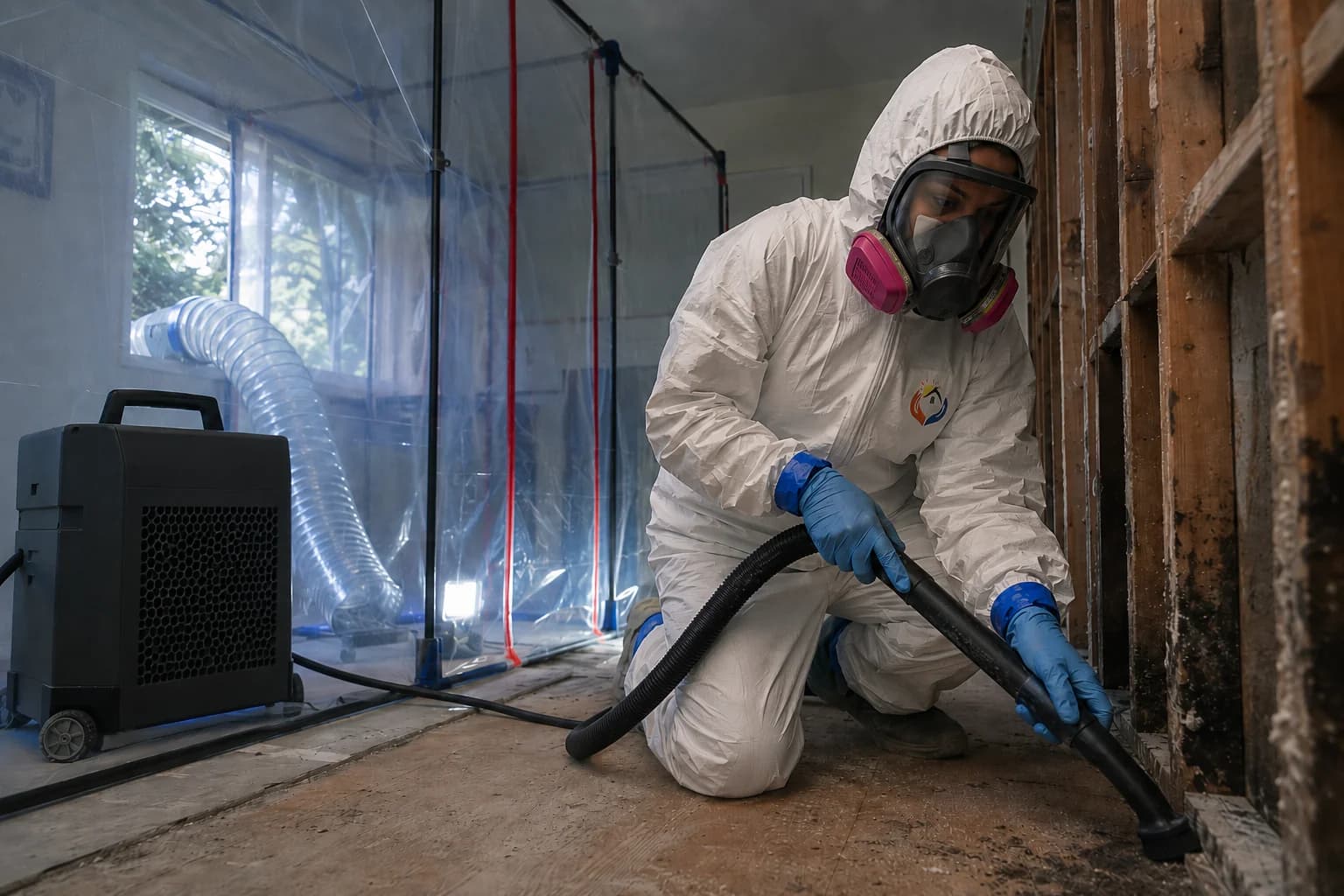 Illustrative image
The overview
What is mold remediation?
Mold remediation is a professional service that identifies mold contamination through testing, contains affected areas to prevent cross-contamination, removes mold-colonized materials, treats structural surfaces with antimicrobial agents, restores indoor air quality through HEPA filtration, verifies successful remediation through independent post-testing, and reconstructs damaged areas to return residential and commercial properties to safe, healthy conditions.
Professional Mold Remediation Services in Southern California
Quick Answer: Mold remediation professionally removes mold contamination from your home through containment, HEPA air filtration, removal of mold-colonized materials, antimicrobial treatment of structural surfaces, and independent post-remediation verification testing. Mold can cause respiratory illness, allergic reactions, and structural deterioration—never attempt DIY removal for areas larger than 10 square feet. Save The Day Restoration provides IICRC-certified mold remediation throughout Los Angeles and Orange County. Licensed general contractor #1049188, direct insurance billing. Call (562) 246-9908.
Why Is Professional Mold Remediation Necessary?
Mold is a biological contaminant that poses serious health risks and causes progressive structural damage. When mold colonies grow on building materials, they digest organic components—breaking down drywall paper, wood framing, insulation, and other cellulose-based materials. Left untreated, mold weakens structural integrity while continuously releasing spores and mycotoxins into your indoor air.
The appropriate cleanup approach depends on the extent, water source, affected materials and occupants. Some small surface areas may be manageable with precautions; extensive damage, contaminated water or HVAC involvement need additional expertise. Review EPA's cleanup guidance. Correcting the moisture source is essential to limiting recurrence.
Professional mold remediation follows IICRC S520 protocols: identifying and correcting the moisture source, containing the affected area under negative air pressure, removing contaminated materials, treating structural surfaces with professional-grade antimicrobials, and verifying successful remediation through independent third-party testing. This systematic approach eliminates mold contamination completely and prevents recurrence.
What Causes Mold Growth in LA & Orange County Homes?
What Moisture Sources Lead to Mold?
Mold requires only three conditions: moisture, organic material (food source), and temperatures between 60-80°F. Southern California's warm climate provides ideal temperatures year-round, and virtually every building material contains organic components mold can feed on. The only variable is moisture—and Southern California homes face numerous moisture sources.
Water damage events are the most common mold catalyst. Burst pipes, appliance failures, roof leaks, and flooding introduce water that saturates building materials. If professional drying doesn't begin within 24-48 hours, mold colonization starts on wet drywall, wood, insulation, and carpet. Water damage that was “cleaned up” without professional moisture monitoring frequently results in mold discovery weeks or months later.
Plumbing leaks behind walls, under sinks, around toilets, and beneath slabs create chronic moisture conditions ideal for extensive hidden mold growth. These slow leaks can feed mold colonies for months before visible signs appear—musty odors, discoloration, or health symptoms are often the first indicators.
Condensation in poorly ventilated areas—bathrooms without exhaust fans, closets on exterior walls, and spaces behind furniture against cold walls—creates surface moisture that supports mold growth. Coastal LA and Orange County communities (Long Beach, Huntington Beach, Newport Beach, Seal Beach) experience elevated humidity that increases condensation risk.
Poor ventilation in attics, crawl spaces, and enclosed areas traps moisture and creates stagnant air conditions that promote mold. Bathroom exhaust fans venting into the attic (rather than outside) are a common cause of attic mold in Southern California homes.
Where Does Mold Commonly Grow in Homes?
Mold grows wherever moisture persists. Common locations include behind drywall in wall cavities (hidden from view), inside bathroom walls around showers and tubs, beneath kitchen and bathroom sinks, in attics (particularly around bathroom fan exhaust points), inside HVAC systems and ductwork, beneath flooring (especially carpet and hardwood over concrete slabs), in crawl spaces with inadequate ventilation, around window frames where condensation collects, behind wallpaper and paneling, and inside closets on exterior walls. Hidden mold—growing behind walls, above ceilings, and beneath flooring—is especially problematic because it can affect indoor air quality and health long before it becomes visible.
How Does Mold Affect Your Health?
Damp and moldy environments can cause respiratory or allergic symptoms in some people, while others have no symptoms. People with asthma, chronic lung disease or weakened immunity may need additional precautions. See CDC's mold guidance.
If you have symptoms or health concerns, consult a healthcare professional. A property inspection can identify moisture and visible damage, but it cannot determine a medical diagnosis or prove that mold caused a particular symptom.
What Does Professional Mold Remediation Include?
How Is Mold Identified and Tested?
Professional mold assessment begins with visual inspection and moisture mapping using calibrated moisture meters and thermal imaging cameras to identify hidden moisture sources feeding mold growth. Air sampling collects airborne spore concentrations for laboratory analysis, identifying mold species present and quantifying contamination levels compared to outdoor baseline readings. Surface sampling confirms species on visible colonies. Lab results guide the remediation protocol—different species and contamination levels require different approaches.
How Is Mold Contained During Removal?
Containment prevents cross-contamination during remediation. The affected area is sealed with polyethylene sheeting (6-mil minimum), and HEPA-filtered negative air machines create negative pressure that prevents spore migration to unaffected areas. Decontamination chambers are established at containment entry points. HVAC system is shut off and supply/return registers are sealed within the containment zone. This containment remains in place throughout the entire remediation process and is not removed until post-remediation testing confirms successful cleanup.
How Is Mold-Contaminated Material Removed?
Porous materials colonized by mold cannot be cleaned and must be removed: mold-contaminated drywall (cut a minimum of 2 feet beyond the visible mold boundary to capture hidden growth), affected insulation, mold-damaged carpet and padding, contaminated ceiling tiles, and any porous material with embedded mold growth. Removed materials are bagged in sealed polyethylene bags inside the containment before transport to prevent spore release. Semi-porous materials like wood framing are evaluated individually—surface mold on structurally sound wood can be removed through aggressive cleaning and sanding, while wood with deep penetration or structural compromise is replaced.
How Are Structural Surfaces Treated?
Exposed structural surfaces (wood framing, concrete, subfloor) are treated with professional-grade antimicrobial solutions after contaminated materials are removed. HEPA vacuuming removes loose spores from all surfaces. Antimicrobial application kills remaining mold and prevents regrowth. Wire brushing or sanding removes surface colonization from wood framing. Encapsulant coatings may be applied to treated surfaces as an additional barrier against future growth. All treatment products are EPA-registered for mold remediation use.
How Is Remediation Verified?
Independent post-remediation verification (PRV) testing is the final critical step. A third-party industrial hygienist or environmental testing company—not the remediation contractor—collects air and surface samples inside the contained area. Laboratory analysis confirms that airborne spore concentrations are at or below outdoor baseline levels and that no active mold growth remains on treated surfaces. Remediation is not considered complete until PRV testing passes. If testing fails, additional remediation is performed and re-tested until clearance is achieved. This independent verification protects you with documented proof that remediation was successful.
How Much Does Mold Remediation Cost?
Mold remediation costs depend on the extent of contamination, location, and materials involved. Small remediation (one contained area, limited material removal): $2,000-$5,000. Moderate remediation (multiple areas, significant material removal, structural treatment): $5,000-$15,000. Large remediation (extensive contamination, multiple rooms, attic mold, HVAC involvement): $15,000-$30,000+. Whole-house remediation with extensive reconstruction: $30,000-$60,000+.
Mold testing costs $300-$800 for initial assessment with lab analysis. Post-remediation verification testing costs $300-$500. These testing costs are separate from remediation but essential for proper protocol.
Does Insurance Cover Mold Remediation?
Insurance coverage for mold depends on the cause. Mold resulting from a covered peril (burst pipe, appliance failure, firefighting water, storm damage) is typically covered under the water damage claim—the mold is a consequence of the covered event. Many California policies include $5,000-$25,000 in mold coverage, with higher limits available as endorsements.
Mold from maintenance failures (long-term slow leaks, condensation from poor ventilation, deferred repairs) is typically NOT covered, as insurers consider these preventable conditions. Mold from flood damage requires separate flood insurance, which covers mold only if remediation begins promptly.
If your mold resulted from a sudden water damage event, file the claim as water damage with mold as secondary damage—this maximizes coverage. Save The Day Restoration documents the moisture source and mold connection to support insurance claims.
How Long Does Mold Remediation Take?
Small projects (one room, limited contamination): 3-5 days including containment setup, remediation, and clearance testing. Moderate projects (multiple rooms, significant material removal): 5-10 days. Large projects (extensive contamination, attic mold, HVAC systems): 1-3 weeks. Add 1-3 weeks for reconstruction of removed materials after clearance is achieved. Post-remediation testing results typically take 2-3 business days from the lab.
FAQ: Mold Remediation
Q: What does mold remediation mean?
A: Mold remediation is the professional process of identifying, containing, removing, and treating mold contamination in a building. It includes sealing the affected area under negative air pressure, removing mold-colonized materials, treating structural surfaces with antimicrobial agents, filtering air with HEPA scrubbers, and verifying successful cleanup through independent laboratory testing. The goal is returning indoor mold levels to normal background levels and eliminating the moisture source that caused the growth.
Q: Is mold remediation covered by insurance?
A: Mold resulting from a covered peril (burst pipe, appliance failure, storm damage, firefighting water) is typically covered under the originating water damage claim. Many California policies include $5,000-$25,000 in mold-specific coverage. Mold from long-term maintenance failures, condensation, or neglect is generally not covered. File the claim as water damage with mold as secondary damage to maximize coverage.
Q: How much does mold remediation cost?
A: Small projects: $2,000-$5,000. Moderate projects: $5,000-$15,000. Large projects: $15,000-$30,000+. Extensive whole-house remediation: $30,000-$60,000+. Cost depends on contamination extent, location (wall cavities and attics cost more due to access difficulty), species involved, and the volume of material requiring removal and replacement.
Q: Can I remove mold myself?
A: The EPA recommends professional remediation for mold areas larger than 10 square feet. DIY removal without containment spreads spores to unaffected areas, potentially turning a localized problem into whole-house contamination. Household products cannot kill mold in porous materials. Hidden mold behind walls and in attics requires professional detection equipment. For your health and your home, professional remediation is the only effective solution for anything beyond a very small surface patch.
Q: How do I know if I have hidden mold?
A: Warning signs include persistent musty or earthy odors (especially in specific rooms or areas), unexplained allergy symptoms that improve when away from home, visible water stains on ceilings or walls (indicating moisture that may support hidden mold), elevated humidity readings, prior water damage that may not have been fully dried, and discoloration on walls, ceilings, or around fixtures. Professional mold testing with air sampling and moisture mapping is the only way to confirm hidden mold and determine its extent.
Mold remediation demand across our service area peaks in coastal cities like Long Beach, Huntington Beach, Santa Monica, and Laguna Beach, where year-round marine-layer humidity drives persistent growth behind walls, under flooring, and inside HVAC systems regardless of season. High water table communities including Carson and Lakewood face chronic slab-moisture intrusion that feeds mold colonies in carpeting and baseboards. Inland cities with older housing stock, particularly Whittier, Alhambra, and Fullerton, see frequent mold problems in bathrooms, laundry rooms, and attics where original ventilation was never designed to handle the moisture loads of modern occupancy.
Breathe Clean Air Again
Mold contamination doesn't resolve itself—it gets worse. Professional remediation eliminates the problem completely and verifiably.
Call Save The Day Restoration at (562) 246-9908 for IICRC-certified mold remediation throughout Los Angeles and Orange County. Professional containment, removal, treatment, and independent verification testing. Licensed general contractor #1049188, insurance documentation and case-by-case billing arrangements.
Our process
Our Mold Remediation Process Includes:
Professional Mold Testing & Moisture Source Identification
Professional testing identifies mold species and locates the moisture source feeding growth. Both must be addressed for permanent remediation success.
Containment Setup with Negative Air Pressure
Physical containment barriers with negative air pressure prevent mold spores from spreading to unaffected areas during removal. Containment is maintained throughout the project.
HEPA Air Filtration & Scrubbing Throughout Remediation
HEPA air filtration equipment runs continuously to capture airborne spores. Multiple air exchanges per hour maintain safe conditions inside and outside the containment area.
Removal of All Mold-Contaminated Materials
All mold-contaminated drywall, insulation, carpet, and porous materials are removed and disposed of per regulations. We remove materials beyond the visible growth boundary to ensure completeness.
Antimicrobial Treatment of Structural Surfaces
Exposed wood framing, concrete, and non-porous surfaces receive antimicrobial treatment. These products eliminate residual mold and create conditions that resist future colonization.
Independent Post-Remediation Verification Testing
An independent testing firm collects post-remediation air and surface samples. Third-party verification ensures objectivity and meets California remediation standards.
Complete Reconstruction of Removed Materials
Once clearance testing passes, we reconstruct all removed materials. New drywall, insulation, flooring, and finishes are installed to restore your property completely.
Final Walkthrough & Prevention Recommendations
We review moisture control strategies and prevention recommendations to protect your property from future mold problems. Controlling moisture is the key to long-term success.
What we handle
What mold remediation covers
Containment
Sealed Isolation
Removal
Complete Extraction
Verification
Independent Testing
Rebuild
Better Than Before
A clearer path forward
Property damage is stressful.
Getting answers shouldn’t be.
We document the damage, prepare a restoration estimate, and coordinate the scope of work with you and your insurance adjuster. Your insurer determines coverage under your policy.
Talk through your projectClear documentation
Photos, affected areas, and the proposed restoration work.
A defined scope
Restoration estimates prepared with Xactimate.
Practical communication
A team to explain the work and discuss next steps.
Service area
Mold Remediation in
Save The Day Restoration dispatches across all of Los Angeles and Orange County, 24/7.
What does mold remediation mean?
Mold remediation is the professional process of identifying, containing, removing, and treating mold contamination in a building. It includes sealing the affected area under negative air pressure, removing mold-colonized materials, treating structural surfaces with antimicrobial agents, filtering air with HEPA scrubbers, and verifying successful cleanup through independent laboratory testing. The goal is returning indoor mold levels to normal background levels and eliminating the moisture source that caused the growth.
Is mold remediation covered by insurance?
Mold coverage varies, including whether the moisture came from a covered event and whether a mold exclusion or sublimit applies. Coverage depends on the cause of loss, policy terms, exclusions, limits and deductible. Ask your insurer to confirm coverage and any documentation or authorization requirements. We can provide a restoration scope and damage records; direct billing, if available for your claim, must be confirmed in advance.
How much does mold remediation cost?
Small projects: $2,000-$5,000. Moderate projects: $5,000-$15,000. Large projects: $15,000-$30,000+. Extensive whole-house remediation: $30,000-$60,000+. Cost depends on contamination extent, location (wall cavities and attics cost more due to access difficulty), species involved, and the volume of material requiring removal and replacement.
Can I remove mold myself?
The EPA recommends professional remediation for mold areas larger than 10 square feet. DIY removal without containment spreads spores to unaffected areas, potentially turning a localized problem into whole-house contamination. Household products cannot kill mold in porous materials. Hidden mold behind walls and in attics requires professional detection equipment. For your health and your home, professional remediation is the only effective solution for anything beyond a very small surface patch.
How do I know if I have hidden mold?
Warning signs include persistent musty or earthy odors (especially in specific rooms or areas), unexplained allergy symptoms that improve when away from home, visible water stains on ceilings or walls (indicating moisture that may support hidden mold), elevated humidity readings, prior water damage that may not have been fully dried, and discoloration on walls, ceilings, or around fixtures. Professional mold testing with air sampling and moisture mapping is the only way to confirm hidden mold and determine its extent.
Related services
More Mold Remediation services
Here when you need us
Faster to any size disaster.
One call brings a licensed, IICRC-certified crew for water, fire, or mold, day or night.