In this guide
Mold can cause irritation and worsen asthma or allergies, but effects vary. Address the moisture problem and affected materials, and ask a healthcare professional about symptoms; a building inspection cannot diagnose illness.
Keep it handy
A free printable for this guide
Save a copy for your fridge or binder. No email needed.
Moisture & leak observation log
Record stains, odors, humidity readings and changes to share with an inspector.
Read the checklist online
Record what you notice without opening walls or disturbing suspect material. Make a fresh copy for each room.
This log does not diagnose mold or prove a room is dry. If you suspect mold in HVAC equipment, do not run it; seek professional advice.
Look, record, follow up
- Note the room, exact location and when you first noticed the change.
- Record any recent leak, rain event or condensation. Add a photo reference if safe.
- If using a humidity meter, record its reading and location. Arrange help for persistent or recurring moisture.
Space to fill in
- Room / exact location
- First noticed / recent leak or rain
Observation history
Columns: Date / time; What changed / reading; Photo ref.; Action / follow-up. 5 blank rows.
Reference guidance
Make it your own
Stay a step ahead
Home maintenance calendar
Choose your home and its features for a seasonal schedule you can print or add to your calendar.
Build your calendarMold, health concerns and the next practical step
Damp, moldy conditions can affect people differently. Some develop nasal irritation, cough, wheeze or skin symptoms; others have no symptoms. People with asthma, mold allergies, weakened immunity or chronic lung disease need particular care. A building inspection cannot diagnose the cause of someone's illness. See CDC's mold health guidance and speak with a healthcare professional about symptoms.
Separate the health question from the building question
If someone feels unwell, tell their clinician what symptoms they have and whether the home has leaks, visible growth or a musty smell. Do not stop treatment or assume that every symptom comes from mold. A contractor can investigate moisture and affected materials; a clinician evaluates the person.
For the building, record where the problem appears, when it was noticed, whether a leak is active and which repairs have already been attempted. Photograph the area from a safe position. Do not pull away wall coverings or open cavities just to take a picture.
Does black mold mean a particular illness?
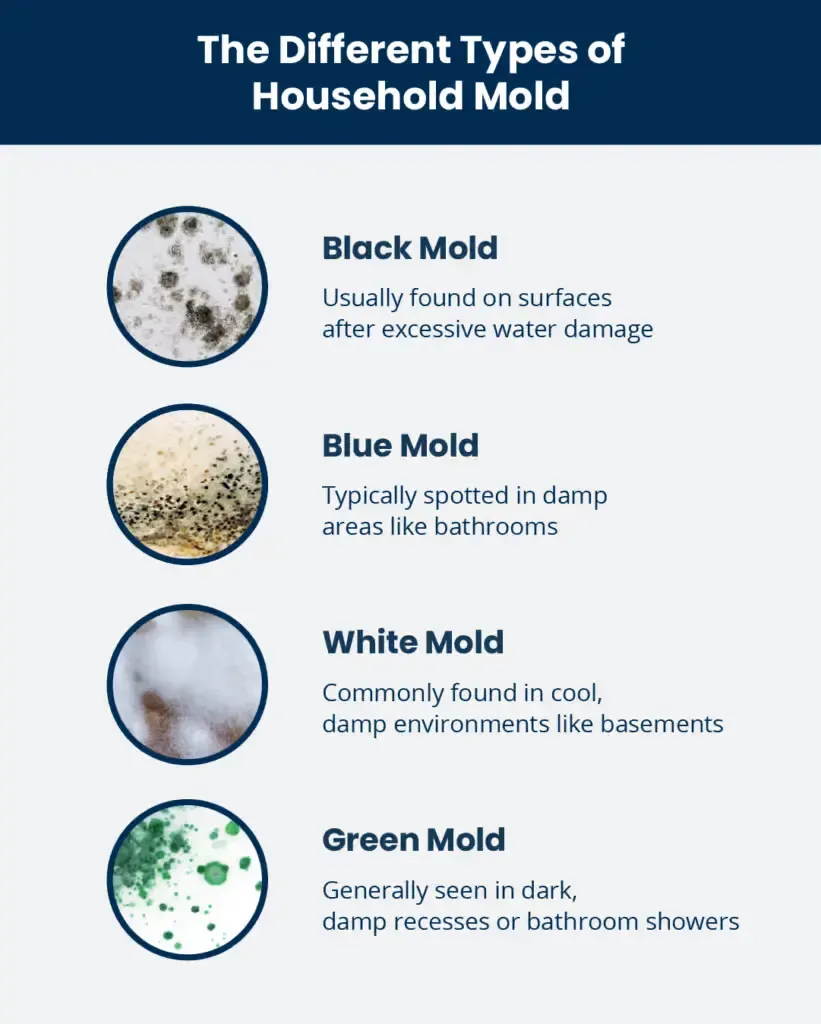
Color does not establish a health diagnosis. CDC says a test does not prove that Stachybotrys caused a particular person's symptoms, and that indoor molds should be addressed regardless of type. Its Stachybotrys guidance also explains that the proposed association with infant pulmonary hemorrhage has not been proven.
A report naming a mold therefore does not establish that it caused cancer, neurological illness or a household member's symptoms. Bring medical questions to a healthcare professional rather than using a remediation quote as a diagnosis.
Choose a cleanup approach that fits the situation
The right approach depends on the area affected, materials, water source and occupants. EPA describes circumstances in which a small area, roughly under 10 square feet, may be handled by a homeowner, with precautions. Larger areas, substantial water damage, contaminated water or suspected HVAC involvement call for additional expertise. Follow EPA's cleanup guidance and discuss health concerns with a clinician before participating in cleanup.
- Keep people and pets away from the work area.
- Have the moisture source assessed and repaired along with the affected materials.
- Ask how the work area will be isolated and how debris will be handled.
- Agree on a written scope, cleanup checks and the conditions needed before repairs close the area.
- Keep the inspection, work records and follow-up instructions together.
What testing can and cannot answer
A sample describes the material or air collected at a particular time. It is not a medical test or a universal certificate of a healthy home. Before buying testing, ask what question it will answer and what decision would change because of the result. Read our mold testing guide for the limits and questions to ask.
Arrange a property assessment
Call (562) 246-9908 to discuss mold remediation in Los Angeles or Orange County. Describe the affected rooms, visible conditions and any active water source. Ask about the assessment scope, price and current availability before scheduling. Save The Day Restoration addresses the property; medical evaluation remains with your healthcare professional.
How we prepare and update our guides
Related serviceMold RemediationTesting, removal & preventionAbout Save The Day Restoration
Save The Day Restoration is a locally owned, IICRC-certified restoration and reconstruction company serving all of Los Angeles and Orange County. The team coordinates water, fire, and mold restoration and reconstruction, including specialist work when needed. Licensed (CSLB #1049188), bonded, and insured, with 24/7 emergency response.
Call (562) 246-9908